Planning what to eat each day can make meals easier to organize, reduce last-minute decisions, and help you become more aware of your eating habits. A Weekly Food Chart provides a simple visual way to plan meals for the entire week while keeping track of food variety, snacks, water intake, and other personal nutrition goals.
Instead of deciding what to eat every morning or evening, you can use a weekly food planner to map out breakfast, lunch, dinner, and snacks ahead of time. This can make grocery shopping more organized, reduce unnecessary food purchases, and help prevent ingredients from being forgotten in the refrigerator or pantry.
A food chart can also be adapted to different lifestyles and household needs. Whether you are planning meals for yourself, your family, or a busy household, a simple weekly meal chart can provide a useful snapshot of your eating routine.
What Is a Weekly Food Chart?
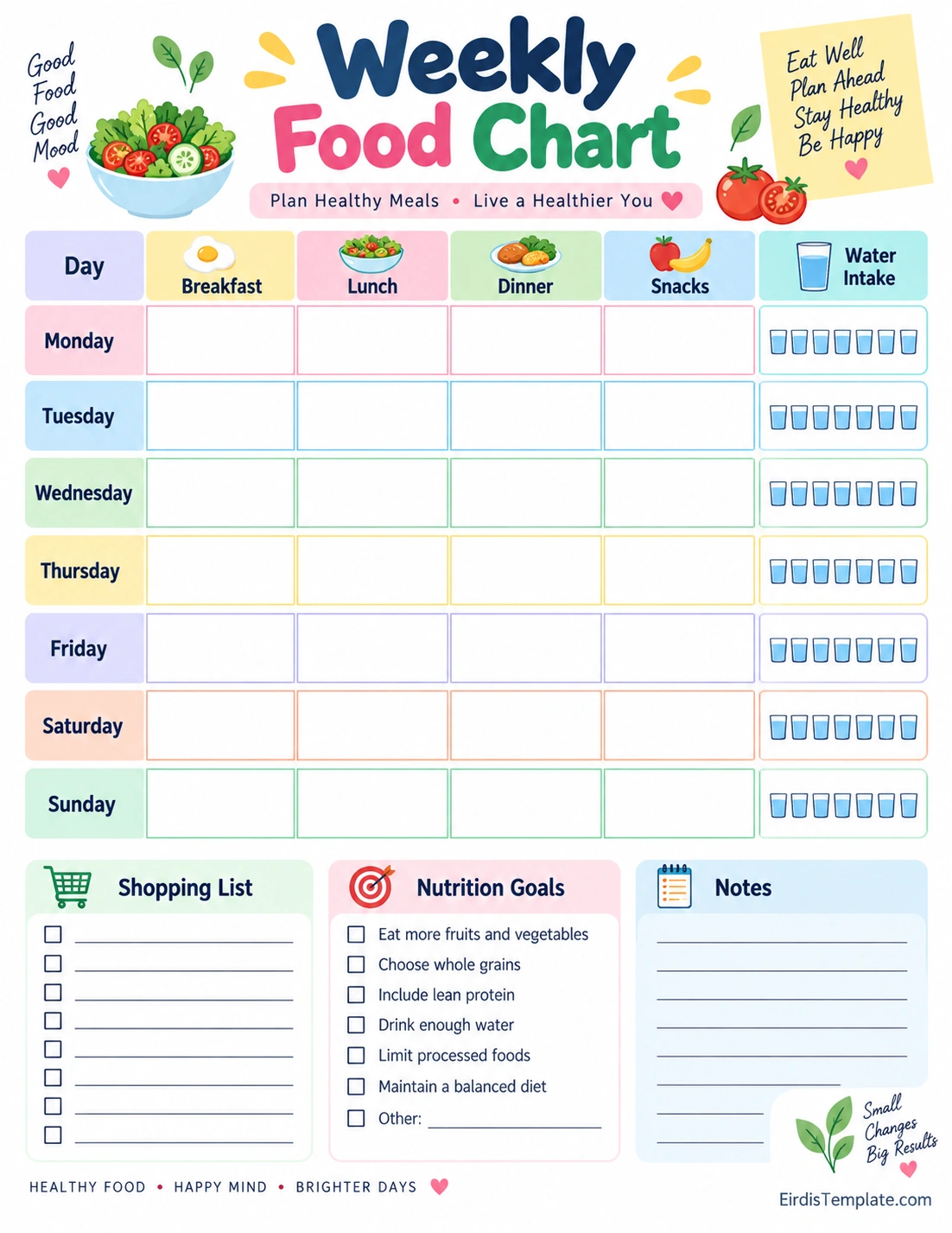
A weekly food chart is a planning tool used to organize meals and food-related goals across seven days. It typically includes spaces for breakfast, lunch, dinner, snacks, and other information that may be useful for meal planning.
Unlike a simple grocery list, a weekly food chart shows when you plan to use the foods you purchase. This can make it easier to coordinate meals and avoid buying ingredients without having a plan for using them.
A basic weekly food chart may include:
- Breakfast plans
- Lunch plans
- Dinner plans
- Snack ideas
- Water intake
- Grocery or shopping lists
- Nutrition goals
- Meal preparation notes
- Leftovers that should be used
The chart can be as detailed or as simple as you need. The goal is to create a practical system that makes meal planning easier rather than more complicated.
Why Use a Weekly Food Chart?
Meal planning is easier when you can see the entire week at a glance. A weekly food chart turns scattered meal ideas into an organized plan that you can review before shopping and throughout the week.
Reduces Daily Decision-Making
Choosing meals at the last minute can become tiring, especially during busy weekdays. Planning meals in advance means you already have an idea of what you will prepare.
This does not mean every meal has to be fixed. You can leave some spaces flexible and make changes when your schedule or preferences change.
Helps Organize Grocery Shopping
Once your meals are planned, you can create a shopping list based on the ingredients you actually need. This can make grocery trips more focused and reduce the temptation to purchase items without a clear purpose.
Can Help Reduce Food Waste
Food waste can occur when ingredients are purchased but never used. A weekly meal plan gives you an opportunity to connect ingredients with specific meals and plan ways to use leftovers.
For example, vegetables purchased for one dinner could potentially be incorporated into lunch the following day. Planning meals around ingredients that are already available can also help use food before it goes to waste.
Encourages Greater Food Awareness
Writing down meals can make your eating patterns more visible. You may notice that you frequently skip breakfast, rely heavily on takeout during certain days, or have limited variety in your meals.
This awareness can help you make intentional changes that fit your personal goals.
How to Create a Weekly Food Chart
Start With Your Weekly Schedule
Before choosing meals, look at the week ahead. Consider work hours, school schedules, appointments, travel, social events, and days when you have more time to cook.
Plan simpler meals for busy days and reserve more involved recipes for days when you have enough time to prepare them.
Plan the Main Meals First
Begin with breakfast, lunch, and dinner. Once the main meals are planned, you can add snacks and other food choices around them.
There is no requirement to create a completely different meal every day. Repeating favorite meals or preparing larger portions for leftovers can make the routine easier to maintain.
Add a Variety of Foods
A useful meal plan can include a variety of food groups and ingredients. Consider incorporating vegetables, fruits, grains, protein sources, and other foods that fit your dietary needs and preferences.
Variety can also make meals more enjoyable and prevent the weekly menu from becoming repetitive.
Plan Snacks Intentionally
If you normally eat snacks between meals, include them on the chart. Having planned snack options can make it easier to prepare or purchase appropriate foods ahead of time.
Snack choices can vary according to personal preferences, dietary requirements, activity levels, and individual nutrition goals.
What to Include in a Weekly Food Chart
A well-designed food chart does not need to contain every detail about your diet. Focus on information that helps you plan and follow your routine.
Breakfast
Write down simple breakfast ideas for each day. Options can include foods such as oatmeal, eggs, fruit, yogurt, whole-grain toast, or other meals that fit your preferences.
Lunch
Plan lunches that work with your schedule. If you work or study away from home, include meals that can be prepared in advance and transported easily.
Dinner
Dinner can be planned around available ingredients, preparation time, and household preferences. Consider using leftovers strategically so that meals do not require completely separate preparation every night.
Snacks
Include snack ideas if snacks are part of your normal routine. Keeping a short list of options can make it easier to avoid completely unplanned choices when hunger occurs between meals.
Water Intake
A weekly food chart can include a simple water-tracking section if monitoring hydration is useful to you. Individual fluid needs vary, so use the chart as a tracking tool rather than assuming one target applies to everyone.
Weekly Food Chart for Healthy Meal Planning
A food chart can support a more balanced approach to meal planning by encouraging you to look at your meals as a complete week rather than focusing on one meal at a time.
When reviewing your plan, consider whether you have included a reasonable variety of foods and whether the meals are practical for your schedule. You can also look for opportunities to include more nutrient-dense choices that you enjoy.
For specific dietary requirements, medical conditions, allergies, or therapeutic diets, it is appropriate to follow guidance from a qualified healthcare or nutrition professional.
How a Weekly Food Chart Can Help With a Food Budget
Meal planning and budgeting can work together. When you know what meals you intend to prepare, you can create a grocery list that is based on those meals.
- Check what you already have: Review your refrigerator, freezer, and pantry before shopping.
- Plan around existing ingredients: Use foods that need to be consumed soon.
- Reuse ingredients: Choose several meals that share some ingredients.
- Limit impulse purchases: Shop with a specific list whenever practical.
- Plan leftovers: Include leftover meals in your weekly schedule.
- Compare meal costs: If your budget is limited, prioritize affordable ingredients and simple recipes.
A food chart does not guarantee that you will spend less, but having a plan can make it easier to make deliberate purchasing decisions.
Using a Weekly Food Chart to Reduce Food Waste
Food waste often happens when food is forgotten or purchased without a clear plan for using it. A weekly food chart can help connect your shopping list with actual meals.
One useful strategy is to check your kitchen before creating the weekly menu. Look for produce, leftovers, frozen foods, and pantry ingredients that should be used first.
You can then build one or more meals around those items. This approach can help you get more value from the food you already have.
Weekly Food Chart for Weight Management Goals
Some people use food charts to become more aware of their eating patterns while working toward weight management goals. Recording planned meals can make portion choices, meal timing, snacks, and food variety easier to review.
However, a food chart should not be treated as a universal weight-loss prescription. Calorie and nutrient needs differ between individuals, and sustainable eating habits depend on many factors.
Instead of focusing only on numbers, you can use a weekly chart to encourage practical habits such as planning meals, including a variety of nutritious foods, preparing meals at home when convenient, and paying attention to hunger and fullness.
Tips for Making Your Weekly Food Chart Work
- Keep it simple: A chart that takes only a few minutes to complete is easier to maintain.
- Plan realistic meals: Consider your actual schedule rather than an idealized week.
- Leave room for flexibility: Unexpected events can change your meal plans.
- Use leftovers: Plan meals that can be repurposed or eaten the next day.
- Shop from the plan: Use your completed chart to create a focused grocery list.
- Review the week: Look at which meals worked well and which ones should be changed.
- Repeat successful meals: Favorite meals can make future planning faster.
Weekly Food Chart vs. Meal Planner
The terms weekly food chart and weekly meal planner are often used interchangeably, but they can emphasize slightly different purposes.
A meal planner generally focuses on deciding what meals will be prepared on particular days. A food chart may provide a broader overview that also includes snacks, water intake, nutrition goals, shopping needs, and notes.
Either format can work well. The best choice is the one that provides enough information to support your routine without becoming difficult to maintain.
How to Review Your Food Chart Each Week
Take a few minutes at the end of each week to review what worked. Identify meals that were easy to prepare, ingredients that went unused, and days when your original plan did not fit your schedule.
Use those observations when creating the next week’s chart. Over time, this process can make meal planning faster because you will have a growing list of meals, ingredients, and routines that already work for you.
Final Thoughts on Using a Weekly Food Chart
A Weekly Food Chart is a practical way to organize meals, shopping, snacks, and food-related goals in one place. By planning ahead, you can reduce daily decision-making, improve grocery organization, make better use of ingredients, and become more aware of your eating routine.
The most useful food chart is not necessarily the most detailed one. It is the one that fits your lifestyle and is simple enough to use consistently. Start with your main meals, add the information that matters to you, and adjust the plan as your schedule and needs change.
With a realistic weekly meal planning routine, you can make food organization easier while creating more opportunities for variety, mindful choices, and less unnecessary waste.
Download: Weekly Food Chart Template

- Printable Weekly Food Chart Template - September 18, 2026
- Free Printable Weekly Cleaning Chart Template - September 18, 2026
- Free Separation Agreement Template (Word) - September 18, 2026
