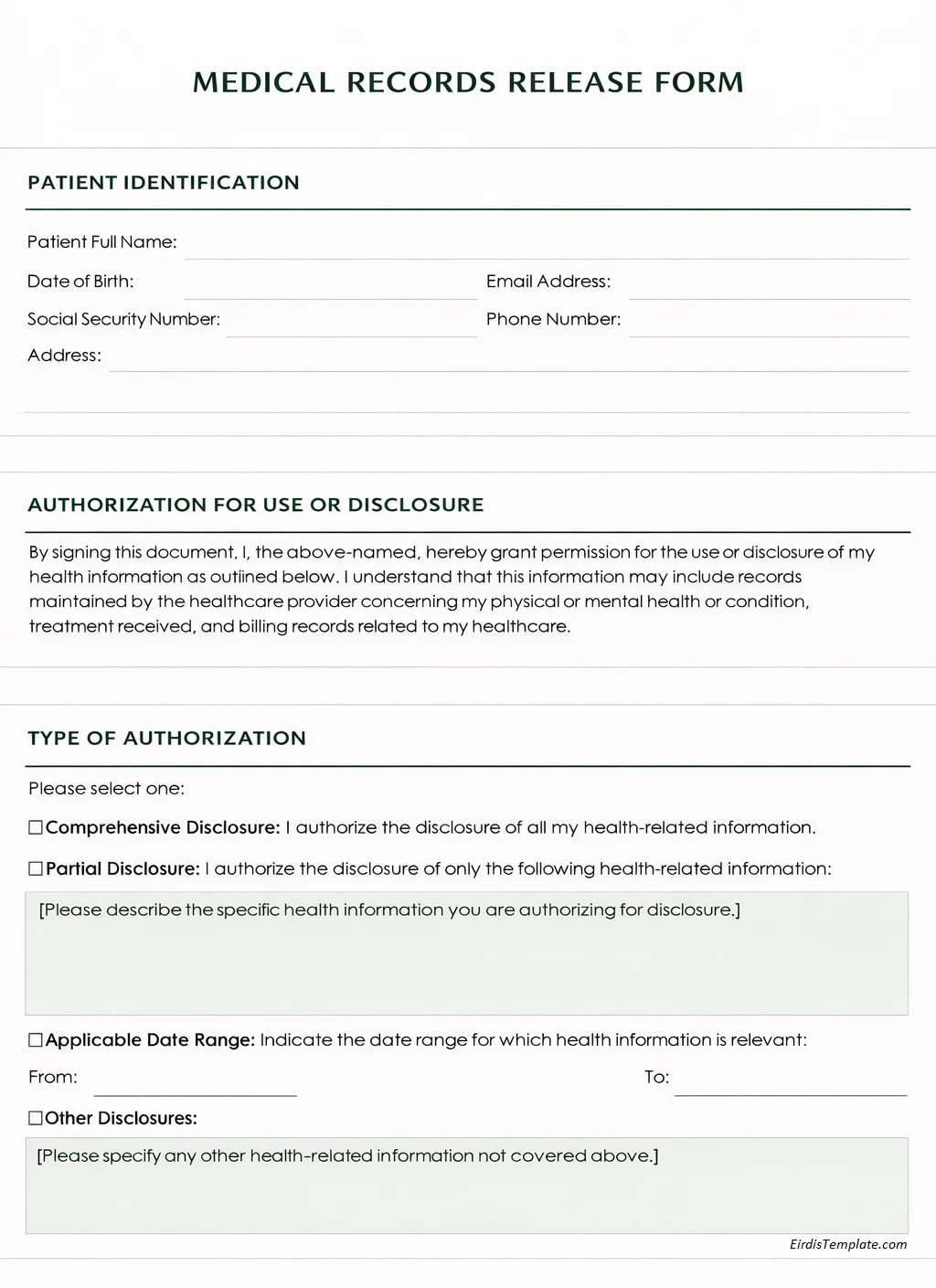
When it comes to healthcare, privacy and confidentiality are paramount. Medical records release forms are legal documents that give patients control over who can access their private health information (PHI).
These forms authorize healthcare providers to share PHI with specific third parties, such as family members, other doctors, employers, or insurers. By ensuring privacy while enabling necessary care coordination, legal processes, or insurance claims, medical records release forms play a crucial role in protecting patient data.
What is a Medical Records Release Form?
A medical records release form, also known as a consent form or authorization form, is a legal document that allows healthcare providers to disclose a patient’s PHI to designated third parties.
This form specifies what information can be shared, who will receive it, and why it is being released.
By signing this form, patients give explicit consent for their healthcare providers to share their medical information for specific purposes.
Why are Medical Records Release Forms Important?
Medical records release forms are essential for several reasons:
- Privacy Protection: These forms ensure that patients have control over who can access their sensitive health information, protecting their privacy rights.
- Care Coordination: By allowing healthcare providers to share medical records with other professionals involved in a patient’s care, these forms facilitate seamless coordination and continuity of treatment.
- Legal Compliance: Medical records release forms help healthcare providers comply with regulations like the Health Insurance Portability and Accountability Act (HIPAA), which mandate the secure handling of PHI.
- Insurance Claims: Patients may need to authorize the release of their medical records to insurance companies for processing claims and ensuring coverage for healthcare services.
Key Elements of a Medical Records Release Form
Medical records release forms typically include the following key elements:
- Patient Information: Name, date of birth, contact information, and identification details.
- Provider Information: Name and contact information of the healthcare provider releasing the medical records.
- Recipient Information: Name and contact information of the individual or organization receiving the medical records.
- Specific Information to be Released: Details on the type of medical information that can be shared.
- Purpose of Disclosure: The reason for releasing the medical records is for treatment coordination or insurance claims.
- Duration of Consent: The timeframe during which the consent to release medical records is valid.
- Signature: The patient’s signature indicates their consent to disclose their medical information.
How to Complete a Medical Records Release Form
Completing a medical records release form is a straightforward process:
- Obtain the Form: Request a copy of the medical records release form from your healthcare provider or download it from their website.
- Fill Out the Form: Provide accurate and complete information, including your personal details, the recipient’s information, and the specific information to be released.
- Specify Purpose: Clearly state the reason for releasing the medical records, whether it is for treatment purposes, legal matters, or insurance claims.
- Sign the Form: Sign and date the form to indicate your consent for the disclosure of your medical information.
- Submit the Form: Return the completed form to your healthcare provider or follow their instructions for submission.
Tips for Safeguarding Your Medical Records
Protecting your medical records and ensuring the confidentiality of your health information is crucial. Here are some tips to safeguard your medical records:
- Keep Copies: Maintain copies of all medical records and release forms for your records.
- Secure Storage: Store physical copies of medical records in a safe place and password-protect electronic files.
- Limit Access: Only share your medical information with authorized individuals or organizations as necessary.
- Review Regularly: Review your medical records periodically to check for accuracy and completeness.
- Report Suspicious Activity: Notify your healthcare provider immediately if you suspect unauthorized access to your medical records.
In Conclusion
Medical records release forms are essential tools that empower patients to control the disclosure of their private health information. By detailing what information can be shared, who will receive it, and why it is being released, these forms ensure patient privacy while enabling necessary care coordination, legal processes, and insurance claims. Understanding the key elements of these forms and following the proper procedures for completion can help patients protect their sensitive medical data and maintain confidentiality in healthcare settings.
Medical Records Release Form Template – DOWNLOAD

- Free Printable T-Chart Template - September 12, 2026
- Free Printable Wanted Poster Template - September 12, 2026
- Surprise Party Invitation Template - September 12, 2026
