When it comes to legal documents, a notarized letter plays a crucial role. But what exactly is a notarized letter? Why is it important? And what should you include in a notarized letter?
In this article, we will explore the ins and outs of notarized letters, why they are necessary, and how to create one that meets legal requirements.
What is a Notarized Letter?
A notarized letter is a document that has been certified by a notary public. A notary public is a person authorized by the government to witness the signing of important documents and verify the identity of the signatories. When a letter is notarized, it means that the notary public has confirmed the authenticity of the document and the identity of the person signing it.
Notarized letters are often used in legal matters, real estate transactions, and other situations where it is important to have a document that is considered legally binding. By having a notarized letter, you can provide an extra layer of security and assurance that the contents of the document are accurate and valid.
Why are Notarized Letters Important?
Notarized letters hold a significant amount of weight in legal matters. They provide evidence that the document in question is legitimate and that the parties involved are who they claim to be. In some cases, notarized letters are required by law to ensure that the document is valid and legally binding.
Having a notarized letter can also help prevent fraud and disputes down the line. Because the notary public verifies the identity of the signatories, it adds an extra layer of protection against potential forgery or deception.
What to Include in a Notarized Letter
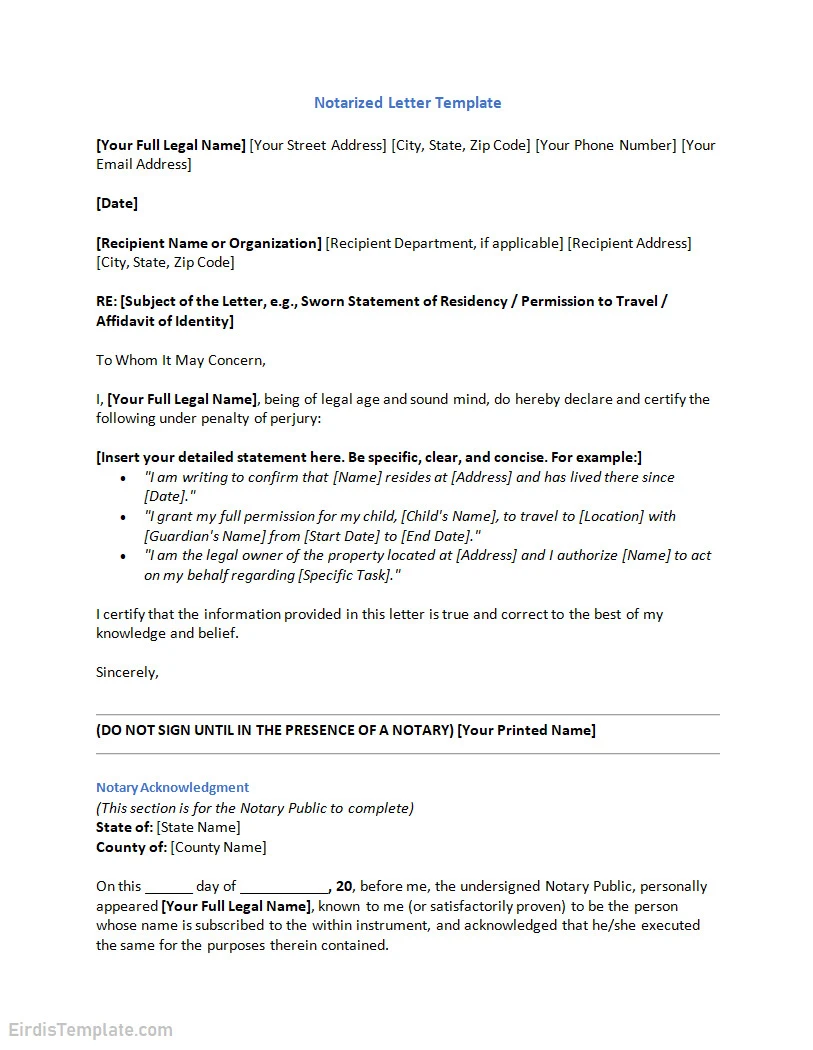
When creating a notarized letter, there are certain elements that you should include to ensure its validity and effectiveness. Here are some key components to include in a notarized letter:
- Date: Make sure to include the date when the letter was written.
- Recipient’s Information: Include the name and address of the person or entity receiving the letter.
- Body of the Letter: Clearly state the purpose of the letter and include all relevant information.
- Signature: Sign the letter in front of the notary public to confirm your identity.
- Notary Public Seal: The notary public will affix their seal and signature to the letter to certify it.
How to Notarize a Letter
Notarizing a letter is a straightforward process, but it is important to follow the proper steps to ensure that the document is valid. Here is how to notarize a letter:
1. Write the letter, making sure to include all necessary information.
2. Find a notary public in your area who can witness the signing of the letter.
3. Bring a valid form of identification with you, such as a driver’s license or passport.
4. Sign the letter in front of the notary public and provide your identification for verification.
5. The notary public will affix their seal and signature to the letter, certifying it as notarized.
Tips for Successful Notarization
Here are some tips to ensure a successful notarization process:
- Choose a reputable notary public: Make sure to select a qualified and experienced notary public to ensure the validity of the notarized letter.
- Double-check the information: Review the letter carefully before having it notarized to ensure that all information is accurate and complete.
- Bring proper identification: Always bring a valid form of identification with you when getting a letter notarized.
- Follow all instructions: Listen to the notary public’s instructions carefully and follow all necessary steps for notarization.
- Keep copies: Make copies of the notarized letter for your records before sending it to the recipient.
In Conclusion
Notarized letters are an essential part of the legal process, providing an extra layer of security and assurance for important documents. By understanding what a notarized letter is, why it is important, and how to create one, you can ensure that your documents are legally binding and valid. Remember to follow the necessary steps and include all required information to ensure a successful notarization process.
Notarized Letter Template – DOWNLOAD

- Free Printable Monthly Schedule Template - April 3, 2026
- Free Printable Monthly Meal Planner Template - April 1, 2026
- Printable Monthly Work Schedule Template - March 30, 2026
