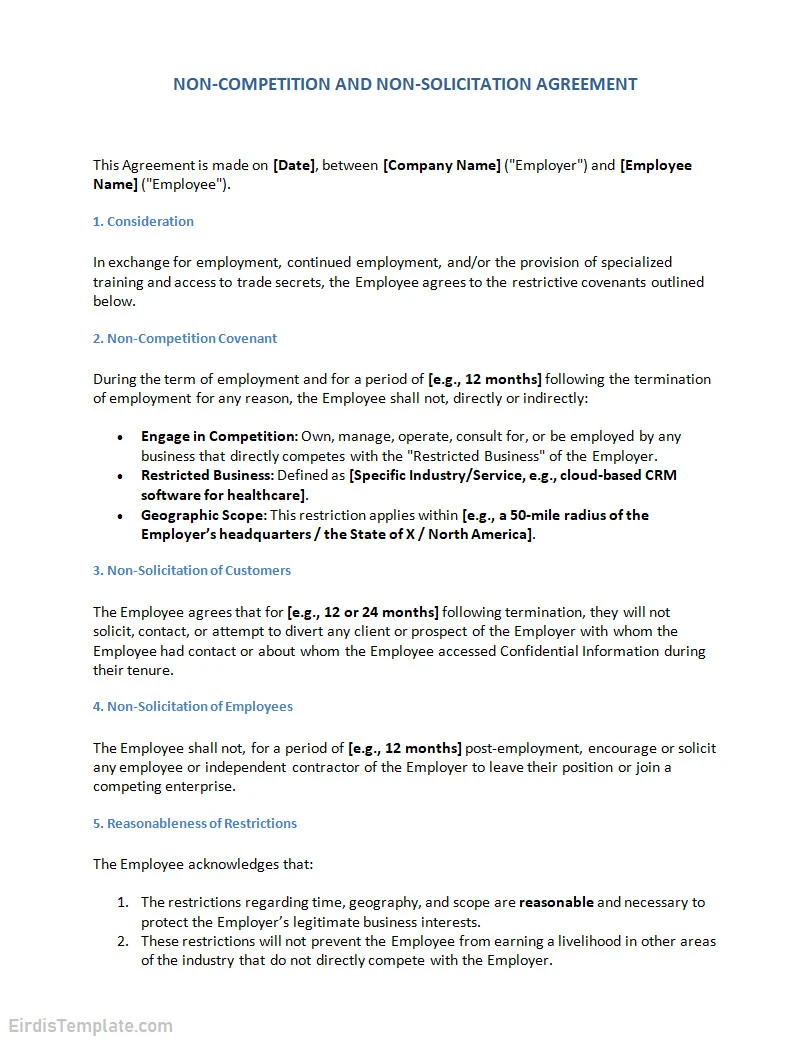
Non-competition agreements, also known as non-compete clauses, are contractual agreements between an employer and an employee that restrict the employee from engaging in certain competitive activities after the employment relationship ends. These agreements are designed to protect a company’s confidential information, trade secrets, and client relationships.
Non-competition agreements are common in industries where employees have access to sensitive information or have specialized skills that could be used to the detriment of their former employer.
What is a Non-Competition Agreement?
A non-competition agreement is a legal contract that prohibits an employee from working for a competitor or starting a competing business for a specified period of time and within a specific geographic area after leaving their current employer. These agreements typically outline the scope of prohibited activities, the duration of the non-compete period, and any compensation or benefits that the employee will receive in exchange for agreeing to the restrictions.
Non-competition agreements are often used to protect a company’s investment in employee training and development, as well as to safeguard valuable business relationships and prevent unfair competition. However, these agreements must be reasonable in scope and duration to be enforceable in court.
Why are Non-Competition Agreements Important?
Non-competition agreements are important for employers because they help protect their intellectual property, trade secrets, and competitive advantage. By restricting employees from working for competitors or starting competing businesses, companies can safeguard their proprietary information and maintain their market position.
For employees, non-competition agreements can limit their future job prospects and restrict their ability to earn a living in their chosen field. It is essential for employees to carefully review and negotiate the terms of a non-competition agreement before signing to ensure that the restrictions are fair and reasonable.
What to Include in a Non-Competition Agreement
When drafting a non-competition agreement, employers should consider the following key elements to ensure that the agreement is enforceable and serves its intended purpose:
- Scope of Prohibited Activities: Clearly define the specific activities that the employee is prohibited from engaging in during the non-compete period.
- Duration of Non-Compete Period: Specify the length of time that the non-competition restrictions will be in effect after the employee departs from the company.
- Geographic Restrictions: Limit the geographic area where the employee is prohibited from competing to a reasonable radius around the company’s location.
- Consideration: Provide the employee with some form of consideration, such as additional compensation or benefits, in exchange for agreeing to the non-compete restrictions.
- Confidentiality Obligations: Include provisions requiring the employee to maintain the confidentiality of the company’s proprietary information and trade secrets both during and after employment.
How to Enforce a Non-Competition Agreement
To enforce a non-competition agreement, an employer must demonstrate that the restrictions are reasonable in scope, duration, and geographic area, and that they are necessary to protect legitimate business interests. Employers should also ensure that the agreement is supported by adequate consideration and that the employee fully understands the terms and consequences of the agreement.
If an employee violates a non-competition agreement, the employer may seek legal remedies, such as injunctive relief or monetary damages, through litigation. However, enforcing a non-compete agreement can be challenging, and courts will carefully scrutinize the terms of the agreement to ensure that they are fair and do not unduly restrict the employee’s ability to earn a living.
Tips for Successful Non-Competition Agreements
When negotiating a non-competition agreement, both employers and employees should keep the following tips in mind to ensure a fair and enforceable agreement:
- Seek Legal Advice: Consult with an experienced employment attorney to review and help negotiate the terms of the non-compete agreement.
- Be Specific: Clearly define the prohibited activities, duration of the non-compete period, and geographic restrictions in the agreement.
- Offer Consideration: Provide the employee with fair compensation or benefits in exchange for agreeing to the restrictions.
- Update as Needed: Review and update non-competition agreements regularly to ensure that they remain relevant and enforceable in changing business environments.
- Consider Alternatives: Explore alternative forms of protection, such as confidentiality agreements or non-solicitation agreements, to achieve the same goals while minimizing undue restrictions on employee mobility.
- Communicate Clearly: Ensure that the employee fully understands the terms and implications of the non-competition agreement before signing to avoid misunderstandings or disputes later on.
In conclusion, non-competition agreements play a vital role in protecting a company’s competitive edge and intellectual property while also impacting the careers and opportunities of employees. By carefully drafting and negotiating non-compete agreements that are fair and reasonable to both parties, employers and employees can navigate the complexities of these agreements successfully. It is essential for all parties involved to seek legal advice and understand their rights and obligations before entering into a non-competition agreement.
Non-competition Agreement Template – WORD

- Free Printable Monthly Schedule Template - April 3, 2026
- Free Printable Monthly Meal Planner Template - April 1, 2026
- Printable Monthly Work Schedule Template - March 30, 2026
