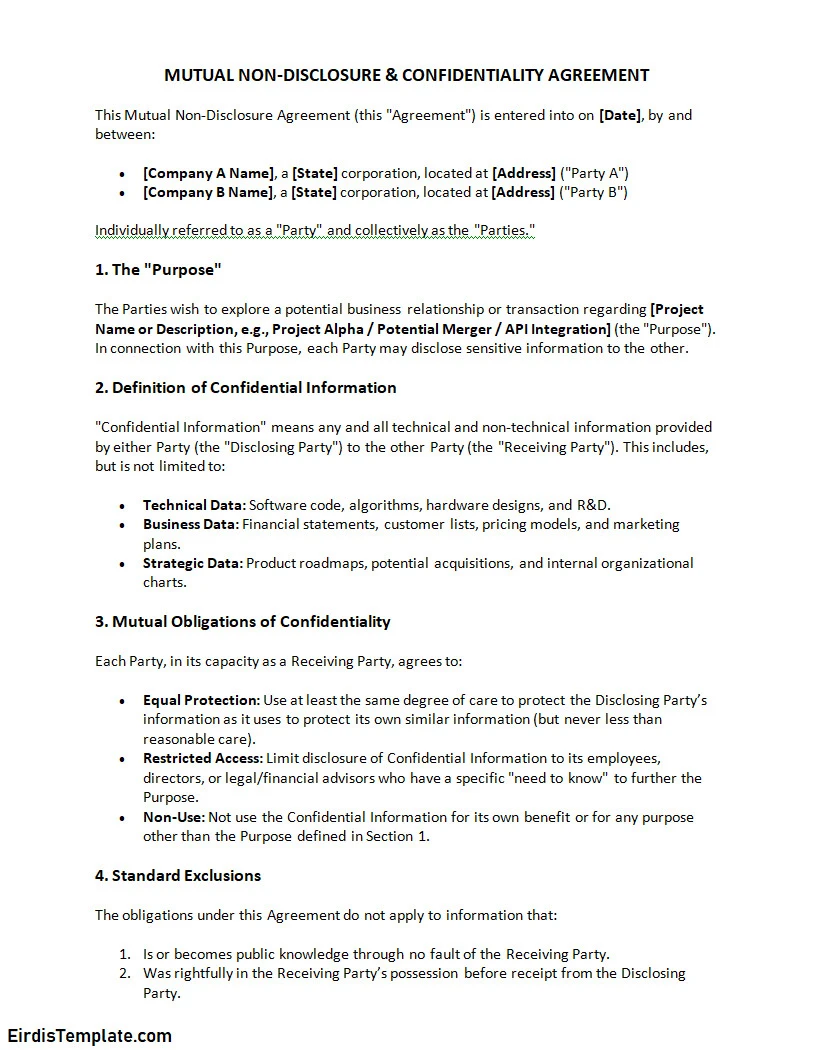
In today’s fast-paced business world, protecting sensitive information is more important than ever. One way to ensure that your company’s confidential information remains secure is by entering into a mutual confidentiality agreement with another party.
These agreements, also known as non-disclosure agreements (NDAs), are a legal contract between two or more parties that outlines the terms and conditions under which confidential information will be shared and kept private.
What is a Mutual Confidentiality Agreement?
A mutual confidentiality agreement is a legal document that is used to protect sensitive information shared between two or more parties. This type of agreement is typically used when two parties are considering entering into a business relationship or partnership and need to share confidential information to move forward.
By signing a mutual confidentiality agreement, all parties involved agree to keep the information shared between them confidential and not disclose it to any third parties.
Why are Mutual Confidentiality Agreements Important?
Mutual confidentiality agreements are important for several reasons. First and foremost, they help protect your company’s sensitive information from falling into the wrong hands. By clearly outlining the terms and conditions under which information can be shared, these agreements provide a legal framework for holding parties accountable if they breach the agreement.
Additionally, mutual confidentiality agreements help build trust between parties, as each party can feel confident that its information will be kept confidential.
What to Include in a Mutual Confidentiality Agreement
When drafting a mutual confidentiality agreement, there are several key components that should be included to ensure that the agreement is thorough and legally binding. Some of the key elements to include in a mutual confidentiality agreement are:
- Definition of Confidential Information. Clearly define what information is considered confidential and should be protected under the agreement.
- Obligations of the Parties. Outline the responsibilities of each party in terms of keeping the information confidential and how long they are required to do so.
- Exceptions to Confidentiality. Specify any circumstances under which the information can be disclosed, such as with the consent of both parties or if required by law.
- Term of the Agreement. Clearly state the duration of the agreement and when it will expire.
- Remedies for Breach. Detail the actions that will be taken if one party breaches the agreement, such as seeking damages or injunctive relief.
- Jurisdiction and Governing Law. Specify the jurisdiction and governing law that will apply to the agreement in case of any disputes.
How to Draft a Mutual Confidentiality Agreement
Drafting a mutual confidentiality agreement can be a complex process, but there are some key steps to follow to ensure that the agreement is clear, thorough, and legally binding. Here are some tips for successfully drafting a mutual confidentiality agreement:
- Consult with Legal Counsel. Before drafting the agreement, it is important to consult with legal counsel to ensure that all necessary legal considerations are taken into account.
- Be Specific and Detailed. Clearly define the confidential information that is covered under the agreement and be specific about the obligations of each party.
- Use Clear and Concise Language. Avoid using overly technical language or jargon in the agreement to ensure that all parties can easily understand their obligations.
- Include Necessary Provisions. Make sure to include all necessary provisions, such as remedies for breach and jurisdiction, to ensure that the agreement is comprehensive.
- Review and Revise. It is important to carefully review and revise the agreement before finalizing it to ensure that all terms are accurate and reflect the intentions of all parties involved.
Tips for Successful Implementation of Mutual Confidentiality Agreements
Successfully implementing a mutual confidentiality agreement requires more than just drafting a solid document. Here are some tips for ensuring that your mutual confidentiality agreement is effective and serves its intended purpose:
- Educate Parties Involved. Make sure that all parties involved in the agreement understand their obligations and the importance of keeping information confidential.
- Regularly Review and Update. It is important to regularly review and update the agreement to ensure that it remains relevant and effective over time.
- Monitor Compliance. Monitor compliance with the agreement to ensure that all parties are following the terms and conditions outlined in the agreement.
- Seek Legal Advice When Needed. If any issues or disputes arise regarding the agreement, seek legal advice to resolve them in a timely manner.
- Build Trust. Building trust between parties is essential for the successful implementation of a mutual confidentiality agreement, so make sure to communicate openly and honestly throughout the process.
In conclusion, mutual confidentiality agreements are an essential tool for protecting sensitive information in today’s business world. By clearly outlining the terms and conditions under which confidential information will be shared and kept private, these agreements help build trust between parties and ensure that information remains secure.
When drafting a mutual confidentiality agreement, it is important to be specific, detailed, and thorough to avoid any misunderstandings or disputes down the line. By following the tips outlined in this article, you can successfully implement a mutual confidentiality agreement that protects your company’s sensitive information and fosters strong business relationships.
Mutual Confidentiality Agreement Template – Word

- Free Printable Monthly Schedule Template - April 3, 2026
- Free Printable Monthly Meal Planner Template - April 1, 2026
- Printable Monthly Work Schedule Template - March 30, 2026
