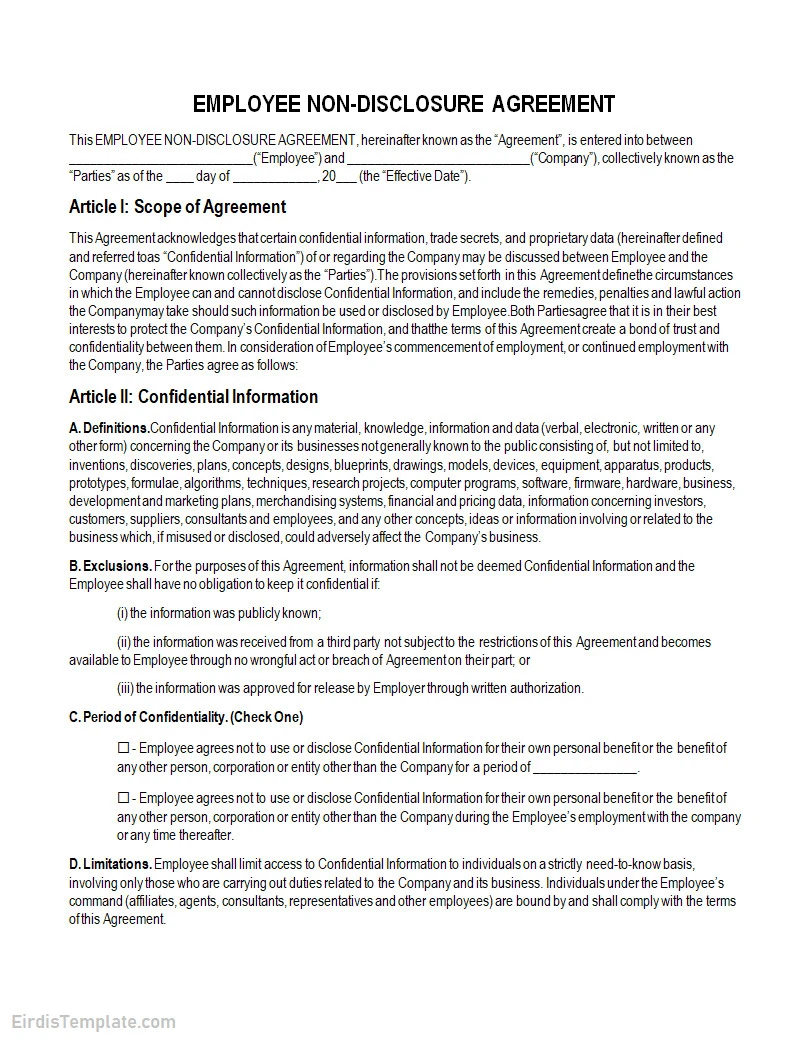
In any business, protecting sensitive information is crucial to maintaining a competitive edge. Non-disclosure agreements (NDAs) are legal contracts that help safeguard confidential information from being shared with unauthorized parties. When it comes to employees, NDAs play a vital role in ensuring that proprietary knowledge stays within the company’s walls.
Let’s delve into the what, why, and how of non-disclosure agreements for employees.
What is a Non-Disclosure Agreement?
A non-disclosure agreement, also known as a confidentiality agreement, is a legal document that outlines the confidential information that one party shares with another. In the case of employees, NDAs are used to protect sensitive business information, trade secrets, and intellectual property from being disclosed to competitors or the public without authorization.
Non-disclosure agreements typically define what constitutes confidential information, the parties involved, the duration of the agreement, and the consequences of breaching the agreement. By signing an NDA, employees agree to keep certain information confidential and not to disclose it to anyone outside the company.
Why are Non-Disclosure Agreements Important for Employees?
Non-disclosure agreements are essential for employees for several reasons. Firstly, they help protect a company’s intellectual property and trade secrets from being leaked to competitors. This is especially crucial in industries where innovation and proprietary knowledge are key to staying ahead in the market.
Secondly, NDAs provide a legal framework for addressing breaches of confidentiality. If an employee violates the terms of the agreement by disclosing confidential information, the company can take legal action against them to seek damages or prevent further disclosure.
Moreover, NDAs help build trust between employers and employees. By having employees sign an NDA, companies signal that they take confidentiality seriously and expect their employees to do the same. This can foster a culture of privacy and discretion within the organization.
What to Include in a Non-Disclosure Agreement for Employees
When drafting a non-disclosure agreement for employees, it’s important to include the following key elements:
- Definition of Confidential Information. Clearly define what information is considered confidential and should be protected under the agreement.
- Parties Involved. Specify who the parties to the agreement are, including the company and the employee(s) signing the NDA.
- Duration of the Agreement. State how long the confidentiality obligations will last, whether it’s for the duration of employment or beyond termination.
- Consequences of Breach. Outline the repercussions of breaching the agreement, such as legal action, monetary damages, or termination of employment.
- Exceptions to Confidentiality. Include any exceptions where the employee may be allowed to disclose confidential information, such as with written consent from the company.
- Governing Law. Specify which state or country’s laws will govern the agreement and any disputes that may arise.
How to Implement Non-Disclosure Agreements Effectively
Implementing non-disclosure agreements effectively requires clear communication and enforcement. Here are some tips for successfully incorporating NDAs into your company’s policies:
- Educate Employees. Provide training on the importance of confidentiality and the implications of signing an NDA.
- Customize NDAs. Tailor the agreement to the specific needs of your business and the type of information being protected.
- Review Regularly. Regularly review and update NDAs to ensure they remain current and relevant to your business operations.
- Enforce Consistently. Enforce the terms of the agreement consistently for all employees to demonstrate the importance of confidentiality.
- Seek Legal Advice. Consult with legal counsel to ensure that your NDAs comply with state and federal laws and are enforceable in court.
- Monitor Compliance. Monitor employees’ compliance with the NDA and address any breaches promptly to mitigate potential risks.
Conclusion
In conclusion, non-disclosure agreements are a valuable tool for protecting confidential information within a company, especially when it comes to employees. By clearly defining what constitutes confidential information, setting out the consequences of breach, and enforcing the terms consistently, businesses can safeguard their trade secrets and intellectual property. Implementing NDAs effectively requires a proactive approach to education, customization, and enforcement. By following these guidelines, companies can create a culture of confidentiality and trust that benefits both employers and employees alike.
Non-disclosure Agreement Template for Employees – DOWNLOAD

- Free Printable Monthly Schedule Template - April 3, 2026
- Free Printable Monthly Meal Planner Template - April 1, 2026
- Printable Monthly Work Schedule Template - March 30, 2026
