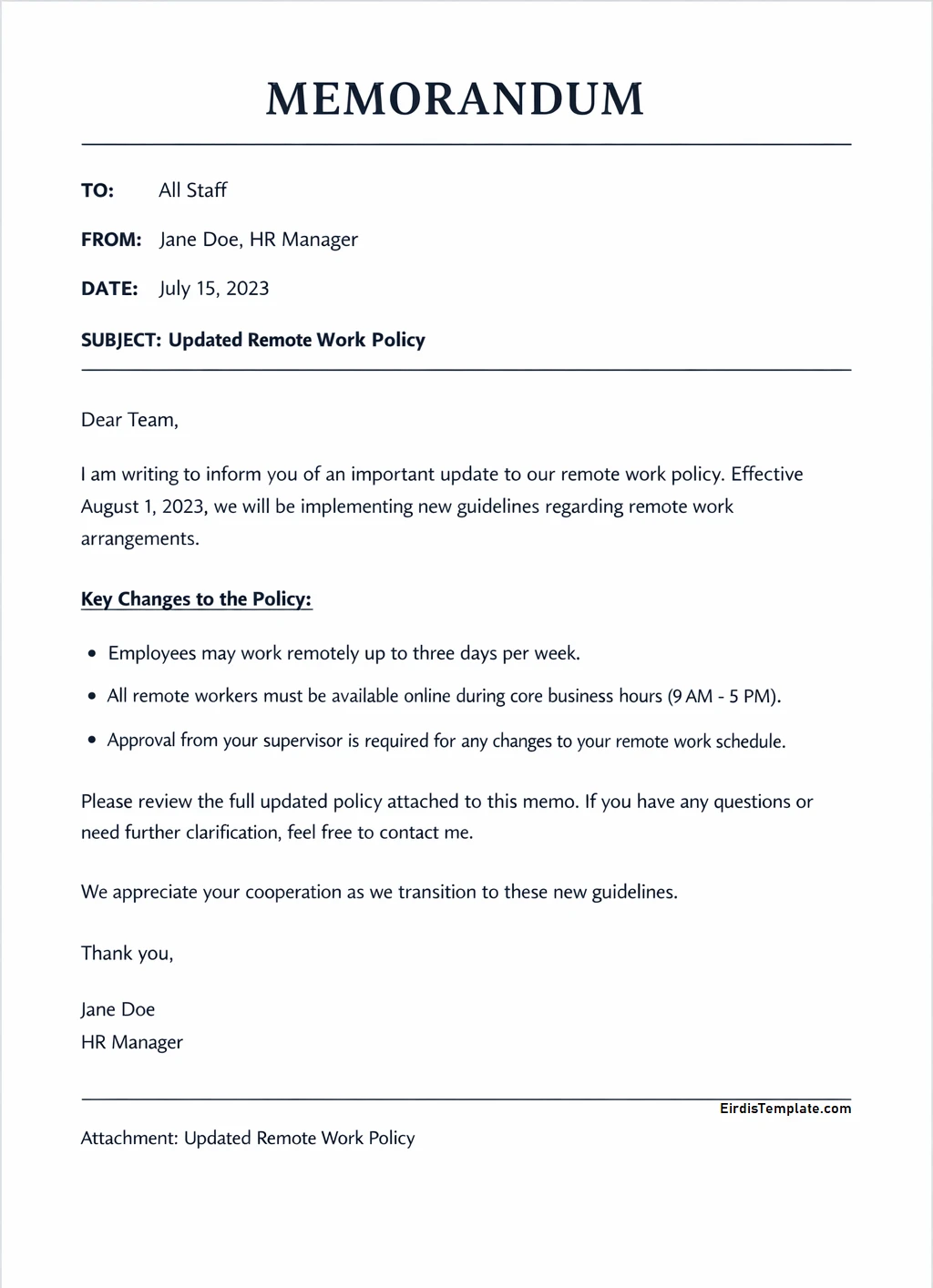
In any organization, effective communication is key to success. One of the most common forms of written communication within a business is the memorandum, also known as a memo.
Memos are used to provide clear, concise, and official written communication within an organization, often to a group of people, to inform them of decisions, announce events, or propose actions. They are instrumental in conveying factual information such as policy changes, project updates, or procedural instructions, and can also be used for reminders, requesting specific information, or reporting to a superior.
What is a Memo?
A memo is a short written document used for internal communication within an organization. It is typically used to inform employees about important information, decisions, or events. Memos are usually brief, to the point, and written in a formal tone. They are meant to convey information quickly and efficiently to a targeted audience.
Memos are often used to announce policy changes, provide updates on ongoing projects, or share important information with employees. They can also be used to request specific information from employees, remind them of upcoming events or deadlines, or report to supervisors on the progress of a project.
Why Use Memos for Business Communication?
Memos serve as an essential tool for effective communication within an organization. They offer several benefits that make them a valuable form of written communication in the workplace. Here are some key reasons why memos are important for business communication:
Memos provide a written record of important decisions, announcements, and events within the organization. This helps ensure that everyone is on the same page and can refer back to the information as needed.
- They are a quick and efficient way to communicate information to a large group of people within the organization.
- Memos help maintain transparency and accountability within the organization by documenting important communications.
- They can be used to reinforce key messages, remind employees of important deadlines or events, and request specific information from employees.
- Memos can also serve as a formal way to report to supervisors or higher management on the progress of a project or to seek approval for proposed actions.
What to Include in a Memo?
When writing a memo, it is important to include the following key components to ensure that the message is clear, concise, and effective:
1. Header: Include the date, recipient’s name, sender’s name, and subject line at the top of the memo.
2. Opening: Start with a brief introduction that clearly states the purpose of the memo.
3. Body: Provide the main message or information in the body of the memo. Use short paragraphs and bullet points for clarity.
4. Conclusion: Summarize the key points and include any action items or next steps that need to be taken.
5. Closing: End the memo with a polite closing statement and your contact information for any follow-up questions.
6. Attachments: If necessary, include any relevant attachments or documents with the memo.
How to Write an Effective Memo?
Writing an effective memo requires careful planning and attention to detail. Here are some tips to help you craft a clear and impactful memo:
1. Know Your Audience: Understand who will be receiving the memo and tailor your message to their needs and expectations.
2. Be Clear and Concise: Keep your message brief and to the point, using simple language that is easy to understand.
3. Use a Formal Tone: Maintain a professional tone throughout the memo, but avoid using jargon or technical language that may be confusing.
4. Organize Your Thoughts: Structure your memo with a clear introduction, body, and conclusion to guide the reader through the information.
5. Proofread and Edit: Review your memo carefully for spelling and grammar errors, and make sure the content is accurate and well-organized.
6. Follow Up: After sending the memo, follow up with recipients to ensure they have received and understood the information.
Tips for Writing Effective Memos
To ensure that your memos are well-received and understood by your audience, consider the following tips for writing effective memos:
1. Keep It Simple: Use clear and simple language to convey your message effectively.
2. Use Bullet Points: Break down information into bullet points for easy readability.
3. Highlight Key Points: Use bold or italic text to emphasize important information.
4. Proofread Carefully: Check for spelling and grammar errors before sending out the memo.
5. Provide Context: Include relevant background information to help recipients understand the purpose of the memo.
6. Seek Feedback: Encourage recipients to provide feedback or ask questions if they need clarification.
7. Follow Up: Check in with recipients after sending the memo to ensure they have understood the information.
By following these tips and best practices, you can create clear, concise, and effective memos that effectively communicate important information within your organization. Memos are a valuable tool for internal communication and can help ensure that everyone is informed, engaged, and aligned with the goals and objectives of the organization.
Memorandum Template – DOWNLOAD

- Free Printable Name Tent Template - March 10, 2026
- Mortgage Amortization Schedule Template - March 9, 2026
- NDA Disclosure Agreement Template (Word) - March 5, 2026
