Writing a letter of recommendation for a friend is both an honor and a responsibility. It involves providing a personal endorsement of your friend’s character, skills, and attributes to give a potential employer, admissions committee, or landlord a holistic view beyond what a resume alone can convey.
By highlighting your friend’s positive personal qualities and work ethic through real-life experiences, the letter validates their trustworthiness and suitability for the opportunity, especially for entry-level applicants or those with less extensive professional experience.
What is a Letter of Recommendation?
A letter of recommendation is a personalized document written by someone who knows the individual well and can attest to their qualities, skills, and achievements.
It serves as a formal endorsement of the person’s suitability for a particular role or opportunity, providing insights that go beyond what can be gleaned from a resume or application form.
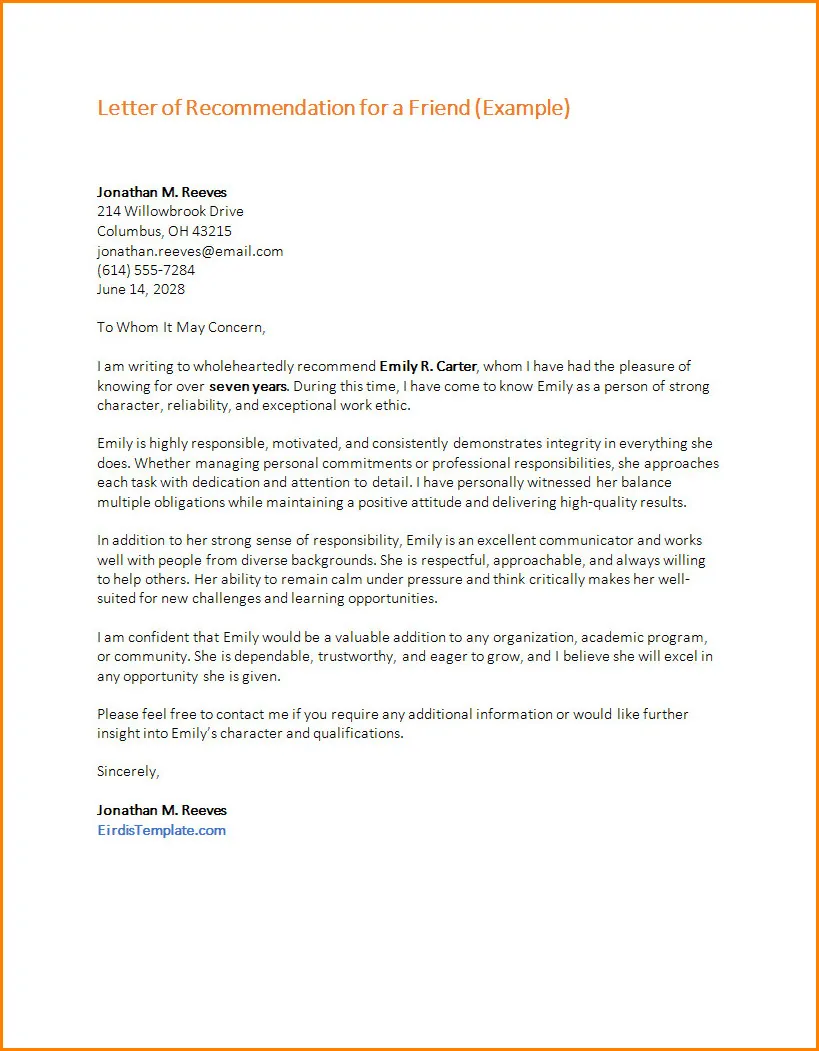
Why is It Important?
A letter of recommendation is crucial because it offers a unique perspective on the individual’s character, work ethic, and potential. It helps decision-makers evaluate the candidate from a more personal and nuanced standpoint, allowing them to make a more informed judgment about the individual’s suitability for the position or opportunity.
Personalized Endorsement
One of the primary reasons why a letter of recommendation is important is that it provides a personalized endorsement of the candidate. Unlike a resume or application form, which may only list the candidate’s qualifications and experiences, a letter of recommendation offers insights into the candidate’s character, values, and work ethic.
This personalized endorsement can help the recipient get a better sense of who the candidate is as a person and whether they would be a good fit for the opportunity. By highlighting the candidate’s positive qualities and attributes, the letter of recommendation adds depth and context to the candidate’s application, making them more memorable and compelling to the recipient.
Credibility and Trustworthiness
Another reason why a letter of recommendation is important is that it enhances the candidate’s credibility and trustworthiness. When a respected individual vouches for the candidate’s abilities and character, it adds a layer of credibility to the candidate’s application.
Recipients of letters of recommendation are more likely to trust the endorsement of someone who knows the candidate well and can speak to their qualities from firsthand experience. This trustworthiness can make a significant impact on the recipient’s decision-making process, influencing their perception of the candidate and their likelihood of being selected for the opportunity.
Comprehensive Evaluation
Furthermore, a letter of recommendation allows for a more comprehensive evaluation of the candidate. While resumes and applications provide valuable information about the candidate’s qualifications and experiences, they often lack the personal touch that a letter of recommendation can offer.
By providing anecdotes, examples, and personal insights, a letter of recommendation paints a more complete picture of the candidate, showcasing their strengths, accomplishments, and potential for success. This holistic view of the candidate helps decision-makers make a more informed judgment about the candidate’s suitability for the opportunity, leading to better matches between candidates and positions.
Types of Letters of Recommendation
There are various types of letters of recommendation that individuals may need throughout their lives. For example, a professional letter of recommendation is commonly used when applying for a job or internship. This type of letter typically focuses on the candidate’s work ethic, skills, and accomplishments in a professional setting.
On the other hand, an academic letter of recommendation is often required for college or graduate school applications. This letter highlights the candidate’s academic achievements, intellectual abilities, and potential for success in an academic environment. It is usually written by a teacher, professor, or academic advisor who can speak to the candidate’s academic performance and potential.
Additionally, a personal letter of recommendation is more informal and focuses on the candidate’s personal qualities, character, and values. This type of letter is often requested for rental applications, volunteer opportunities, or personal recommendations. It provides a more holistic view of the candidate as a person, beyond their professional or academic achievements.
What Should a Personal Letter of Recommendation Include?
When writing a personal letter of recommendation for a friend, it is important to include specific examples that illustrate the person’s qualities and capabilities. Here are some key elements to consider:
Introduction and Relationship
Begin the letter by introducing yourself and your relationship with the candidate. Provide some context on how you know the candidate and in what capacity. This sets the stage for the rest of the letter and establishes your credibility as a recommender.
For example, you could start by saying, “I have had the pleasure of knowing Sarah for the past five years as a colleague at our previous workplace. During this time, I have had the opportunity to witness her dedication, professionalism, and exceptional work ethic firsthand.”
Qualities and Skills
Highlight the candidate’s positive qualities, skills, and attributes that are relevant to the opportunity they are applying for. It is important to be specific and provide examples or anecdotes that demonstrate these qualities in action.
You could mention qualities such as leadership, teamwork, communication skills, problem-solving abilities, or any other strengths that the candidate possesses. Back up these qualities with real-life examples that showcase how the candidate has demonstrated these skills in the past.
Examples and Anecdotes
One of the most powerful aspects of a letter of recommendation is the use of examples and anecdotes to illustrate the candidate’s capabilities. These real-life stories provide concrete evidence of the candidate’s skills and qualities, making a stronger case for their suitability for the opportunity.
For instance, you could share a specific incident where the candidate went above and beyond to help a colleague, demonstrated exceptional problem-solving skills on a project, or showed leadership in a challenging situation. These anecdotes bring the candidate’s qualities to life and show the recipient what they can expect from the candidate in a real-world context.
Recommendation and Endorsement
After highlighting the candidate’s qualities and providing examples to support your claims, it is important to clearly state your recommendation and endorse the candidate for the position or opportunity they are seeking. Be confident in your recommendation and express why you believe the candidate is a strong fit for the role.
For example, you could say, “Based on Sarah’s exceptional work ethic, strong leadership skills, and unwavering dedication, I do not doubt that she would be a valuable asset to your team. I wholeheartedly recommend her for the position and am confident that she will excel in any task you assign her.”
Contact Information
Include your contact information at the end of the letter in case the recipient has any further questions or requires additional information about the candidate. This shows that you are willing to provide further support or clarification if needed and demonstrates your commitment to the candidate’s success.
You could end the letter by saying, “If you have any further questions or would like to discuss Sarah’s qualifications in more detail, please feel free to contact me at [your phone number] or [your email address]. I am more than happy to provide any additional information you may need.”
How to Write a Letter of Recommendation for a Friend
Writing a letter of recommendation for a friend can be a rewarding but challenging task. It requires thoughtful consideration, attention to detail, and a genuine understanding of the friend’s qualities and capabilities. Here are some tips to help you craft a compelling letter of recommendation for your friend:
Personal Connection
Start by reflecting on your personal connection with your friend. Think about the experiences you have shared, the qualities you admire in them, and the moments that have showcased their strengths. This personal connection will help you write a more authentic and heartfelt letter that resonates with the recipient.
Consider the friend’s character, values, work ethic, and interpersonal skills. Reflect on how they have demonstrated these qualities in various situations, both personal and professional. This reflection will guide you in highlighting the friend’s most relevant and impactful attributes in the letter.
Specific Examples
When writing a letter of recommendation, specificity is key. Instead of making general statements about your friend’s qualities, provide specific examples that demonstrate these qualities in action. Share anecdotes, stories, or projects where your friend excelled and showcased their skills and attributes.
For example, instead of saying, “Sarah is a great team player,” you could say, “During our team project last year, Sarah took the lead in coordinating tasks, ensuring clear communication among team members, and motivating everyone to meet our deadlines. Her collaborative spirit and dedication were instrumental in our project’s success.”
Honesty and Authenticity
It is crucial to be honest and authentic in your letter of recommendation. Avoid exaggerating or embellishing your friend’s qualities or achievements. Instead, focus on providing a genuine and balanced perspective that accurately reflects your friend’s strengths and areas for growth.
Highlighting both your friend’s positive attributes and areas where they have shown growth and improvement can provide a more well-rounded and authentic portrayal of their character and capabilities. This honesty will resonate with the recipient and lend credibility to your recommendation.
Professional Tone
While a letter of recommendation for a friend may have a more personal touch, it is essential to maintain a professional tone throughout the letter. Use formal language, proper grammar, and a respectful demeanor when addressing the recipient and discussing your friend’s qualifications.
Keep the letter focused on the friend’s professional qualities and skills relevant to the opportunity they are seeking. Avoid including personal or irrelevant information that does not contribute to the overall recommendation. Stay on topic and present the friend in the best light possible within a professional framework.
Proofreading and Editing
Before finalizing your letter of recommendation, be sure to thoroughly proofread and edit it for any errors or inconsistencies. Check for spelling mistakes, grammatical errors, and formatting issues to ensure the letter is polished and professional in presentation.
Consider asking a trusted colleague or mentor to review the letter for feedback and suggestions. A fresh set of eyes can catch any overlooked mistakes or areas that could be improved. Taking the time to fine-tune and polish the letter demonstrates your commitment to providing a high-quality recommendation for your friend.
Letter of Recommendation for a Friend Template
A Letter of Recommendation for a Friend Template helps you write a sincere and well-organized endorsement that highlights character, strengths, and personal qualities. It provides a clear structure for sharing relevant examples and positive traits while maintaining a professional and respectful tone. With a thoughtfully designed template, you can confidently support your friend and make your recommendation meaningful and credible.
Download our Letter of Recommendation for a Friend Template today to write a compelling and supportive recommendation with ease.
Letter of Recommendation for a Friend Template – DOWNLOAD

- Free Printable Monthly Schedule Template - April 3, 2026
- Free Printable Monthly Meal Planner Template - April 1, 2026
- Printable Monthly Work Schedule Template - March 30, 2026
