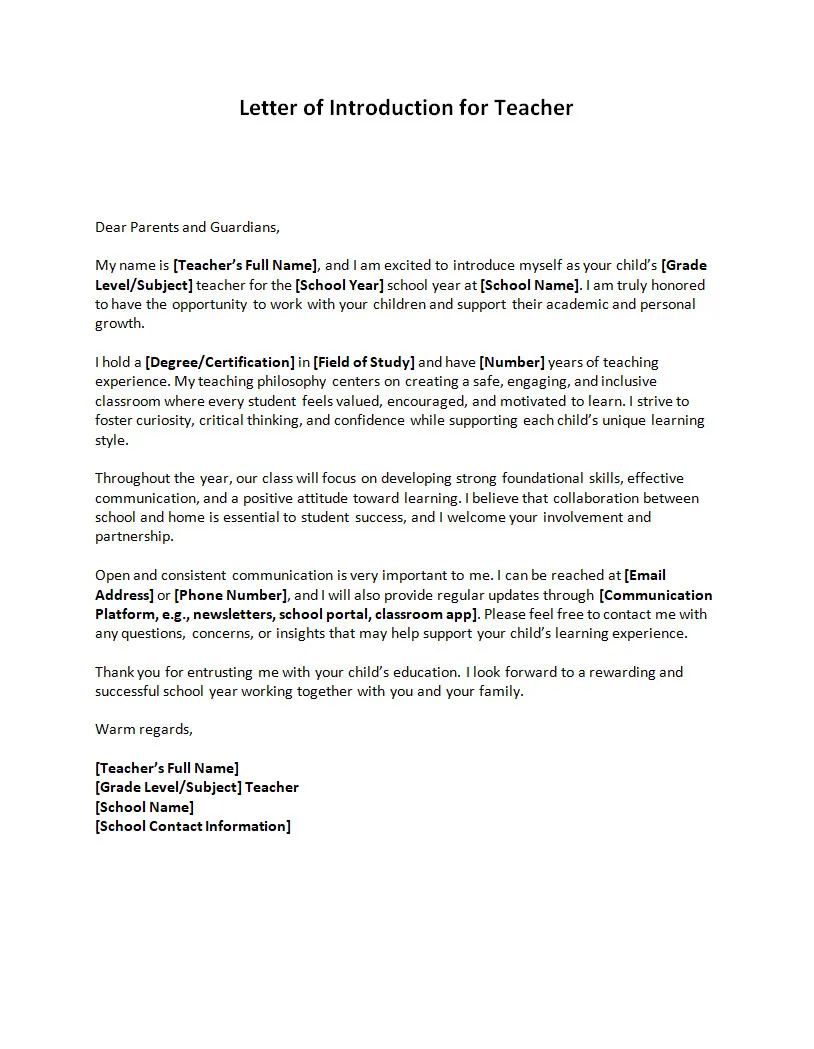
As a teacher, one of the most important ways to start the school year on a positive note is by writing a letter of introduction to your students’ parents and guardians. This letter serves as a bridge between the classroom and the home, helping to build a strong connection that will benefit the student throughout the year.
In this article, we will explore the key elements of a successful letter of introduction, why it is important, and how to write one that will set the tone for a successful school year.
What is a Letter of Introduction for Teachers?
A letter of introduction for teachers is a letter that is sent home to parents and guardians at the beginning of the school year. The purpose of this letter is to introduce the teacher, share their teaching philosophy and goals for the year, provide practical information, and set expectations for communication.
The goal of the letter is to ease parental concerns, inspire their involvement in their child’s education, and set a positive tone for the school year.
Key Elements of a Letter of Introduction
When writing a letter of introduction for teachers, several key elements should be included to ensure its success:
Personal Introduction
Start by introducing yourself and sharing a bit about your background and experience as a teacher. Sharing personal anecdotes or experiences that have shaped your teaching philosophy can help parents understand your approach to education and feel more connected to you as a teacher.
Teaching Philosophy
Share your beliefs and values about education and teaching. Discuss why you chose to become a teacher, what you hope to instill in your students, and how you plan to create a positive and engaging learning environment. This can help parents understand your approach to teaching and feel confident in your ability to support their child’s growth.
Goals for the Year
Outline your goals and expectations for the upcoming school year. Whether it’s academic goals, social-emotional learning objectives, or classroom management strategies, sharing your vision for the year can help parents understand what to expect and how they can support their child’s learning at home. This transparency can build trust and collaboration between teachers and parents.
Practical Information
Include important information such as contact details, office hours, and any classroom policies that parents should be aware of. Providing clear and concise information about how to reach you, when you are available for meetings, and what to expect in terms of homework, behavior expectations, and grading can help parents feel informed and prepared for the school year.
Expectations for Communication
Let parents know how they can reach you and how you plan to communicate with them throughout the year. Whether it’s through email, phone calls, parent-teacher conferences, or a classroom newsletter, setting clear expectations for communication can help parents feel supported and involved in their child’s education. Encouraging open dialogue and feedback can strengthen the partnership between teachers and parents.
How to Write a Letter of Introduction
Writing a letter of introduction for teachers can seem like a daunting task, but with some careful planning and consideration, you can create a letter that will set the right tone for the school year. Here are some tips for writing an effective letter of introduction:
Start with a Warm Greeting
Begin your letter with a friendly greeting that will help to establish a positive tone. Consider using a personalized salutation that addresses parents by name or addresses any specific information you may know about their child. A warm and welcoming opening can set the stage for a positive and engaging letter.
Share Personal Details
Share a bit about yourself, including your interests, hobbies, and why you became a teacher. This personal touch can help parents see you as a real person with unique qualities and experiences. Sharing personal anecdotes or experiences that have shaped your teaching philosophy can help parents understand your approach to education and feel more connected to you as a teacher.
Communicate Your Teaching Philosophy
Share your beliefs about education and teaching and how you plan to help your students succeed. Discuss why you chose to become a teacher, what you hope to instill in your students, and how you plan to create a positive and engaging learning environment. This can help parents understand your approach to teaching and feel confident in your ability to support their child’s growth.
Outline Your Goals for the Year
Share your goals and expectations for the upcoming school year, both for yourself and for your students. Whether it’s academic goals, social-emotional learning objectives, or classroom management strategies, sharing your vision for the year can help parents understand what to expect and how they can support their child’s learning at home. This transparency can build trust and collaboration between teachers and parents.
Provide Practical Information
Include important information such as your contact details, office hours, and any classroom policies that parents should be aware of. Providing clear and concise information about how to reach you, when you are available for meetings, and what to expect in terms of homework, behavior expectations, and grading can help parents feel informed and prepared for the school year.
Set Expectations for Communication
Let parents know how they can reach you, whether it’s through email, phone, or in-person meetings, and how you plan to communicate with them throughout the year. Whether it’s through email, phone calls, parent-teacher conferences, or a classroom newsletter, setting clear expectations for communication can help parents feel supported and involved in their child’s education. Encouraging open dialogue and feedback can strengthen the partnership between teachers and parents.
Tips for a Successful Letter of Introduction
When writing your letter of introduction, keep these tips in mind to ensure its success:
Be Genuine
Be authentic to yourself in your letter. Share personal anecdotes or experiences that have shaped your teaching philosophy and why you are passionate about education. This authenticity can help parents see you as a caring and dedicated teacher who is committed to their child’s success.
Keep it Positive
Maintain a positive tone throughout the letter. Focus on highlighting your strengths as a teacher, your excitement for the upcoming school year, and your commitment to supporting your students’ growth. This positivity can help parents feel confident in your ability to create a positive and engaging learning environment for their child.
Be Clear and Concise
Keep your letter focused and to the point. Avoid using jargon or complicated language that may be difficult for parents to understand. Use clear and straightforward language to convey your message effectively and ensure that parents can easily grasp the information you are sharing.
Personalize It
Tailor your letter to the specific needs and interests of your students and their families. Consider including personal anecdotes or experiences that may resonate with parents, such as shared interests or values. This personal touch can help parents feel connected to you as a teacher and build trust in your ability to support their child’s learning.
Invite Feedback
Encourage parents to reach out with any questions or concerns they may have. Let them know that you are open to feedback and value their input in their child’s education. Creating a dialogue with parents can help build a strong partnership and ensure that everyone is working together to support the student’s academic growth.
Follow Up
Be sure to follow up with parents after sending the letter to address any questions or concerns that may arise. Consider sending a follow-up email or scheduling a virtual meeting to discuss any feedback or questions parents may have. This proactive approach to communication can help build trust and reinforce the strong connection between teachers and parents.
Letter of Introduction for Teacher Template – WORD

- Free Printable Monthly Expenses Template - February 12, 2026
- Printable Monthly Employee Schedule Template - February 11, 2026
- Printable Monthly Budget Planner Template - February 10, 2026
