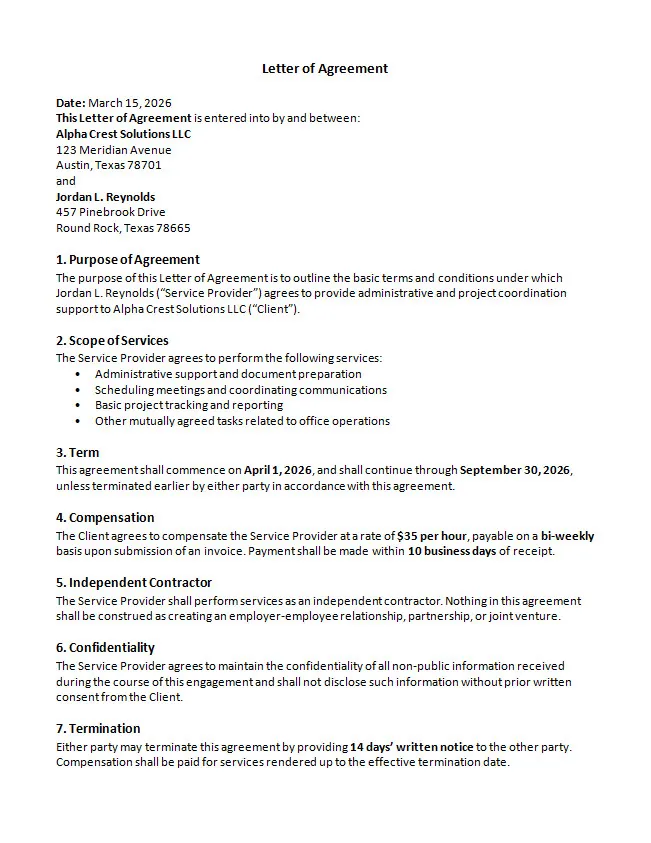
What Is a Letter of Agreement?
A letter of agreement, often referred to as a memorandum of understanding (MOU) or a letter of intent (LOI), serves as a foundational document that lays out the terms and conditions of an agreement between two or more parties. It acts as a precursor to a formal contract, offering a clear and concise record of the parties’ understanding and expectations.
While not as complex as a full-fledged contract, a letter of agreement still holds legal weight and can be used for various types of agreements.
Benefits of Using a Letter of Agreement
There are several benefits to using a letter of agreement in business transactions and agreements. These benefits include:
1. Clarity and Understanding
One of the primary advantages of a letter of agreement is its ability to provide clarity and ensure that all parties have a shared understanding of the terms and conditions of the agreement. By clearly outlining the scope of work, responsibilities, and expectations, a letter of agreement helps prevent misunderstandings and disputes.
2. Flexibility and Adaptability
A letter of agreement offers greater flexibility compared to a formal contract, allowing parties to negotiate and adjust terms more easily. This flexibility is particularly beneficial in situations where the agreement is for a short-term project or where the terms may need to be modified based on changing circumstances.
3. Cost-Effectiveness
Creating a letter of agreement is typically less time-consuming and costly than drafting a comprehensive contract. For simpler agreements with lower risks, a letter of agreement provides a cost-effective solution that still offers legal protection and clarity for all parties involved.
4. Legal Protection
While a letter of agreement may be less formal than a contract, it still provides legal protection for parties involved in the agreement. In the event of a dispute or breach of contract, a well-drafted letter of agreement can serve as evidence of the parties’ intentions and help resolve conflicts more efficiently.
5. Establishing Trust and Professionalism
By creating a formal written document that outlines the terms and conditions of the agreement, parties can demonstrate their professionalism and commitment to the undertaking. A well-crafted letter of agreement can help establish trust between parties and set a positive tone for the business relationship.
When Should You Use a Letter of Agreement?
Letters of agreement are suitable for a wide range of business situations where a formal contract may be unnecessary or impractical. Here are some scenarios where using a letter of agreement is appropriate:
1. Freelance or Consulting Engagements
When hiring freelancers, consultants, or independent contractors for specific projects or services, a letter of agreement can outline the scope of work, payment terms, and other essential details without the need for a lengthy contract.
2. Partnership Formation
When entering into a partnership for a joint venture, collaboration, or business arrangement, a letter of agreement can establish the terms, responsibilities, and expectations of each partner in a clear and concise manner.
3. Service Agreements
For simple transactions or service agreements with straightforward terms and conditions, a letter of agreement can serve as a quick and efficient way to formalize the arrangement without the need for a detailed contract.
4. Trial Periods or Test Projects
When testing a new service provider, product, or business relationship, a letter of agreement can be used to outline the terms of a trial period or test project before committing to a more formal contract.
5. Low-Risk Transactions
For agreements with lower risks or where the scope of work is limited, a letter of agreement can provide sufficient legal protection and clarity without the complexity of a full contract.
Key Elements of a Letter of Agreement
When drafting a letter of agreement, it’s essential to include key elements that provide a comprehensive and detailed overview of the agreement. These key elements typically include:
1. Introduction
The introduction of the letter of agreement should clearly identify the parties involved, provide a brief overview of the purpose of the agreement, and set the tone for the rest of the document.
2. Scope of Work
Defining the scope of work is critical in a letter of agreement as it outlines the specific services, products, or deliverables that will be provided by each party. This section should be detailed and specific to avoid any confusion or misunderstandings.
3. Terms and Conditions
The terms and conditions section of a letter of agreement should outline the payment terms, deadlines, quality standards, and any other relevant conditions that both parties need to adhere to during the agreement period.
4. Duration and Termination
Specifying the duration of the agreement, including start and end dates, renewal options, and termination clauses, is crucial in a letter of agreement. This section helps set clear expectations regarding the timeline of the agreement and how it can be terminated if necessary.
5. Signatures and Date
Having all parties involved sign and date the letter of agreement is essential to signify their acceptance and agreement to the terms outlined. Signatures provide legal validity to the document and confirm that all parties are in mutual consent.
How to Write a Letter of Agreement
Writing a letter of agreement requires attention to detail, clarity, and precision to ensure that all parties understand and agree to the terms outlined. Here are some steps to help you craft a well-written letter of agreement:
1. Start with a Clear Header
Begin the letter of agreement with a clear header that includes the date, names of the parties involved, and a concise title that reflects the purpose of the agreement. The header sets the tone for the document and provides essential information at a glance.
2. Define the Parties Involved
Clearly identify the parties involved in the agreement, including their full legal names, addresses, contact information, and any other pertinent details that establish their identities and roles in the agreement.
3. Outline the Scope of Work
The scope of work section should clearly define the services, products, or deliverables that will be provided by each party. Be specific and detailed in outlining the expectations and responsibilities of each party to avoid any confusion or ambiguity.
4. Specify Terms and Conditions
Detail the payment terms, deadlines, quality standards, and any other conditions that both parties need to comply with during the agreement period. Clearly articulate the expectations and obligations of each party to ensure a smooth and successful partnership.</
5. Include Legal Language
While a letter of agreement is less formal than a contract, it’s essential to include some legal language to ensure that the document is enforceable. This may include clauses related to dispute resolution, indemnification, confidentiality, and any other legal aspects relevant to the agreement.
6. Address Potential Risks
Acknowledge and address any potential risks or uncertainties in the agreement to minimize the chances of disputes later on. By being transparent about potential challenges and discussing how they will be managed, you can build trust and clarity in the agreement.
7. Seek Legal Advice
If you’re unsure about any legal aspects of the agreement or want to ensure that it’s legally sound, consider seeking advice from a legal professional. A lawyer can review the letter of agreement, offer guidance, and make any necessary revisions to protect your interests.
8. Review and Revise
Before finalizing the letter of agreement, take the time to review it carefully and make any necessary revisions. Ensure that all terms are clear, consistent, and accurately reflect the agreement reached between the parties. Make sure to address any feedback or concerns raised by the other party.
9. Sign and Date
Once both parties are satisfied with the terms of the letter of agreement, it’s time to sign and date the document. Having all parties sign the agreement signifies their acceptance and agreement to the terms outlined, making it a legally binding document.
10. Keep a Copy
After the letter of agreement has been signed, make sure to keep a copy for your records. Having a copy on hand can help you reference the terms of the agreement if any issues or disputes arise in the future. It’s also a good practice to provide a copy to the other party for their records.
In Conclusion
Overall, a letter of agreement is a valuable tool in business transactions and agreements, providing clarity, flexibility, and legal protection for all parties involved. By outlining the terms and conditions in writing, a letter of agreement helps establish trust, prevent misunderstandings, and set a solid foundation for a successful business relationship.
Whether you’re hiring a freelancer, forming a partnership, or engaging in a service agreement, a well-crafted letter of agreement can help you navigate the complexities of business dealings with confidence and clarity.
Letter of Agreement Template – DOWNLOAD

- Free Printable Monthly Schedule Template - April 3, 2026
- Free Printable Monthly Meal Planner Template - April 1, 2026
- Printable Monthly Work Schedule Template - March 30, 2026
