Legal memos play a crucial role in the legal field as they are used to analyze and communicate legal issues in a structured, objective manner. Unlike persuasive documents, such as briefs or motions, legal memos are meant to inform rather than persuade.
They are often used as internal documents for research, case strategy, or client communication. In this article, we will explore what legal memos are, their importance, how to write them effectively, and more.
What Is a Legal Memo?
A legal memo, short for memorandum, is a written document that outlines the analysis of a legal issue. It serves as a tool for attorneys to research and communicate complex legal issues clearly and concisely. Legal memos are typically used within law firms, government agencies, and corporate legal departments to guide on legal matters.
What’s a Legal Memo Used For?
Legal memos serve several important functions within the legal field:
- Research: Legal memos are used to conduct legal research on specific issues or cases.
- Case Strategy: Attorneys use legal memos to develop case strategies and assess the strengths and weaknesses of their arguments.
- Client Communication: Legal memos are often shared with clients to explain legal issues clearly and understandably.
Why Is a Legal Memo Required?
Legal memos are required in the legal field for several reasons:
- Clarity: Legal memos enable attorneys to clarify complex legal issues and present them logically and concisely.
- Analysis: Legal memos require attorneys to analyze the law thoroughly and apply it to specific facts or cases.
- Documentation: Legal memos serve as a written record of legal research and analysis for future reference.
Types of Legal Memos
There are several types of legal memos used in the legal field, including:
Internal Memos
Internal legal memos are commonly used within law firms, government agencies, and corporate legal departments for research and case strategy. These memos provide attorneys with a platform to analyze legal issues, develop case strategies, and communicate important information with colleagues. Internal memos are essential for fostering collaboration and ensuring that all team members are informed about the legal aspects of a case.
Client Memos
Client legal memos are designed to communicate legal information to clients clearly and understandably. Attorneys use client memos to explain complex legal issues, provide recommendations for action, and keep clients informed about the progress of their case. Client memos help build trust and transparency between attorneys and their clients, ensuring that clients are well-informed and involved in the decision-making process.
Court Memos
Court memos are submitted to a court as part of a legal brief or motion. These memos are designed to present legal arguments, analyze relevant case law, and persuade the court to rule in favor of the submitting party. Court memos play a critical role in the litigation process, as they help attorneys present their case effectively and advocate for their client’s interests in a legal proceeding.
Memo Structure
A typical legal memo follows a structured format that includes:
Header Section
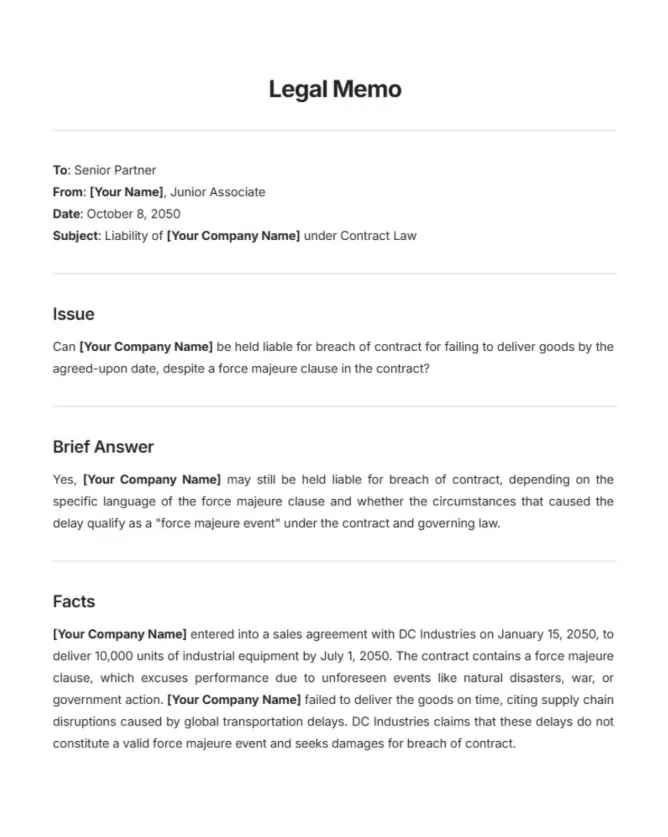
The header section of a legal memo includes important information such as the date, recipient, sender, and subject of the memo. This information helps identify the purpose of the memo and ensures that it is directed to the appropriate recipient. The header section serves as a quick reference point for readers to understand the context and content of the memo.
Issue Statement
The issue statement in a legal memo clearly defines the legal issue or question that needs to be addressed. This statement serves as a roadmap for the reader, outlining the specific issue that will be analyzed in the memo. The issue statement helps focus the analysis and ensures that the memo remains on topic and relevant to the legal issue at hand.
Facts Section
The facts section of a legal memo provides a summary of the relevant facts or background information related to the legal issue. This section helps establish the context for the analysis and ensures that the reader is familiar with the key details of the case. By presenting the facts in a clear and organized manner, attorneys can facilitate a deeper understanding of the legal issues at stake.
Analysis Section
The analysis section of a legal memo is where the attorney evaluates the relevant law and applies it to the facts of the case. This section involves a detailed examination of statutes, regulations, case law, and other legal sources to determine how the law impacts the specific legal issue. The analysis section is critical for developing a well-reasoned argument and providing sound legal advice.
Conclusion Section
The conclusion
Conclusion Section
The conclusion section of a legal memo summarizes the findings of the analysis and provides recommendations or next steps. This section is where the attorney synthesizes the information presented in the memo and offers a clear and actionable conclusion. The conclusion should be supported by the analysis and should address the legal issue concisely and persuasively.
How to Write a Legal Memo
Writing an effective legal memo requires attention to detail and clarity. Here are some tips for writing a successful legal memo:
Identify the Legal Issue
Identifying the legal issue is the first step in writing a legal memo. Clearly defining the legal question or problem that needs to be addressed will help guide your research and analysis. It is essential to narrow down the issue to ensure that your memo remains focused and relevant.
Conduct Thorough Research
Research is a critical component of writing a legal memo. Conduct thorough research on the relevant laws, regulations, and cases that apply to the legal issue at hand. Make sure to cite your sources accurately and consider multiple perspectives to ensure a comprehensive analysis.
Analyze the Law
Once you have conducted your research, it’s time to analyze the law and apply it to the specific facts of the case. Consider different interpretations of the law, evaluate the strengths and weaknesses of each argument, and provide a well-reasoned analysis. It is essential to support your analysis with legal authority and logical reasoning.
Organize Your Memo
Structure your legal memo clearly and logically to guide the reader through your analysis. Use headings and subheadings to break up the memo into digestible sections. Consider using bullet points or numbered lists to highlight key points and make the memo easier to read and understand.
Write a Clear Conclusion
In the conclusion of your legal memo, summarize your findings and provide clear recommendations or next steps. The conclusion should tie together the analysis presented in the memo and offer a persuasive argument for your recommended course of action. Make sure your conclusion is concise, well-supported, and actionable.
Review and Revise
Before finalizing your legal memo, take the time to review and revise your work. Ensure that the memo is well-organized, free of errors, and written clearly and concisely. Consider seeking feedback from colleagues or mentors to help refine your analysis and strengthen your argument.
Legal Memo Template
A Legal Memo helps organize legal analysis in a clear, professional, and easy-to-follow format. It provides structured sections for issues, facts, applicable law, analysis, and conclusions, making complex legal information more understandable and actionable. With a well-designed template, you can save time, maintain consistency, and present legal reasoning accurately and effectively.
Download our Legal Memo Template today to create clear, professional legal memoranda with confidence.
Legal Memo Template – DOWNLOAD

- Free Printable Monthly Schedule Template - April 3, 2026
- Free Printable Monthly Meal Planner Template - April 1, 2026
- Printable Monthly Work Schedule Template - March 30, 2026
