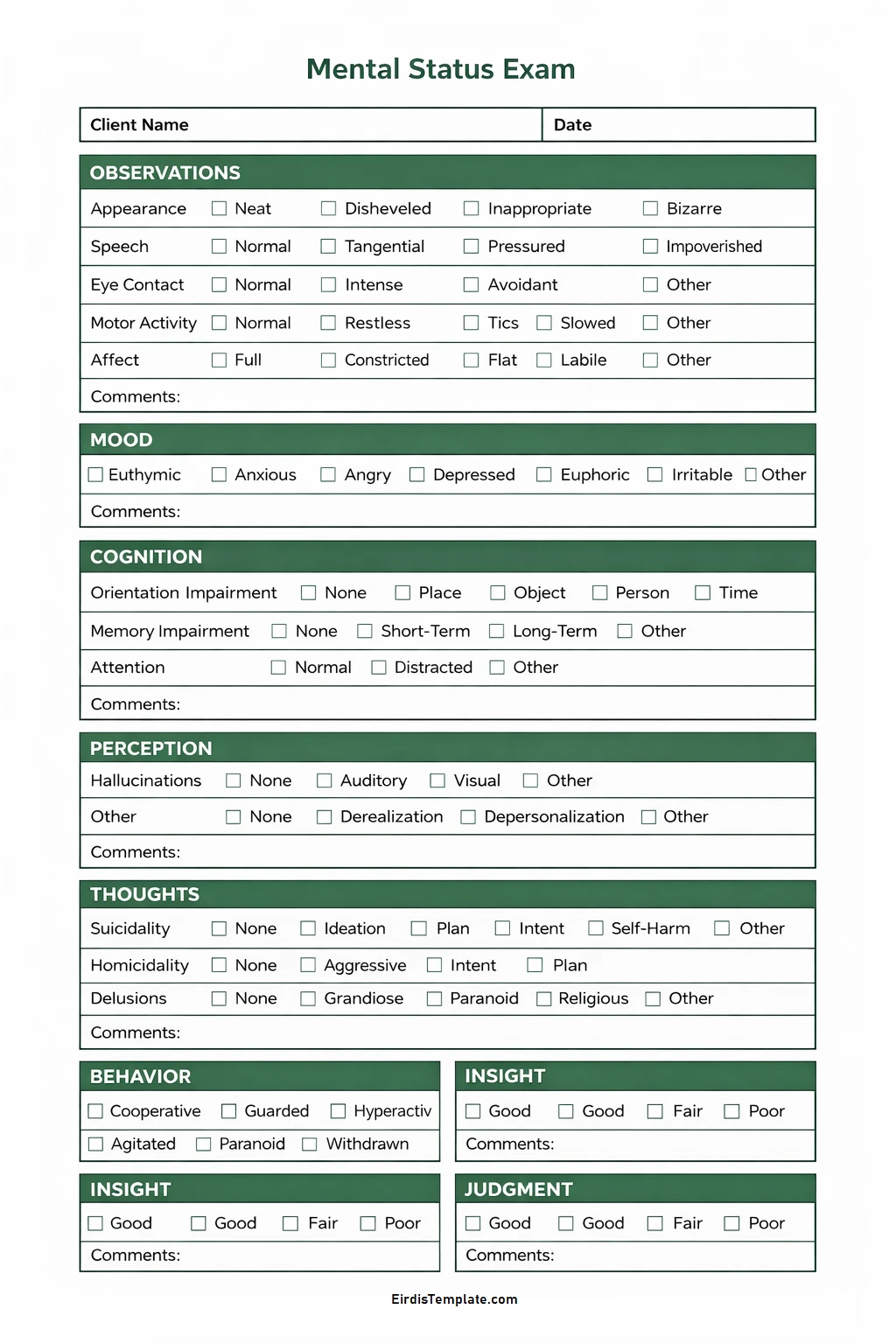
When it comes to understanding a person’s mental state, a mental status examination (MSE) plays a crucial role in providing insights into their cognitive abilities, emotional state, and behavior.
Conducted by mental health professionals such as psychiatrists, psychologists, and other healthcare providers, the MSE helps in diagnosing and managing various mental health conditions and neurological disorders that may impact an individual’s mental processes.
What is a Mental Status Exam?
A Mental Status Exam is a systematic assessment conducted by mental health professionals to evaluate an individual’s current mental functioning. It involves observing and evaluating the individual’s cognitive abilities, emotional state, and behavior to gain a comprehensive understanding of their mental health status.
Why is a Mental Status Exam Important?
A Mental Status Exam is important for several reasons:
- Diagnosis: It helps in diagnosing various mental health conditions and neurological disorders.
- Treatment Planning: It assists in developing an appropriate treatment plan based on the individual’s mental health needs.
- Monitoring Progress: It allows mental health professionals to track the individual’s progress throughout treatment.
- Identifying Areas of Concern: It helps in identifying potential areas of concern or impairment that may require further evaluation or intervention.
Key Elements of a Mental Status Exam
A Mental Status Exam typically includes the following key elements:
- Appearance: Observing the individual’s appearance, grooming, and overall presentation.
- Behavior: Assessing the individual’s behavior, including their level of activity, motor movements, and speech.
- Mood and Affect: Evaluating the individual’s mood (emotional state) and affect (expression of emotions).
- Thought Process: Examining the individual’s thought process, including coherence, logic, and organization.
- Speech: Assessing the individual’s speech patterns, rate, volume, and content.
How to Conduct a Mental Status Exam
Conducting a Mental Status Exam involves the following steps:
- Introduction: Introduce yourself to the individual and explain the purpose of the evaluation.
- Observation: Observe the individual’s appearance, behavior, and interactions with the environment.
- Interview: Engage in a conversation with the individual to assess their cognitive abilities, emotional state, and behavior.
- Documentation: Document your observations and findings accurately for further evaluation and treatment planning.
Tips for Successful Mental Status Exam
Here are some tips for conducting a successful Mental Status Exam:
- Build Rapport: Establish a trusting and supportive relationship with the individual to encourage open communication.
- Remain Objective: Maintain a neutral and non-judgmental attitude throughout the evaluation process.
- Ask Open-Ended Questions: Encourage the individual to share their thoughts and feelings by asking open-ended questions.
- Use Standardized Tools: Utilize standardized assessment tools to ensure consistency and accuracy in your evaluation.
Conclusion
A Mental Status Exam is a valuable tool in mental health assessment, providing vital information about an individual’s mental functioning. By conducting a thorough MSE, mental health professionals can gain insights into the individual’s cognitive abilities, emotional state, and behavior, leading to effective diagnosis and treatment of mental health conditions and neurological disorders. It is essential to approach the MSE with professionalism, empathy, and a commitment to improving the individual’s mental well-being.
Mental Status Exam Template – DOWNLOAD

- Free Printable T-Chart Template - September 12, 2026
- Free Printable Wanted Poster Template - September 12, 2026
- Surprise Party Invitation Template - September 12, 2026
