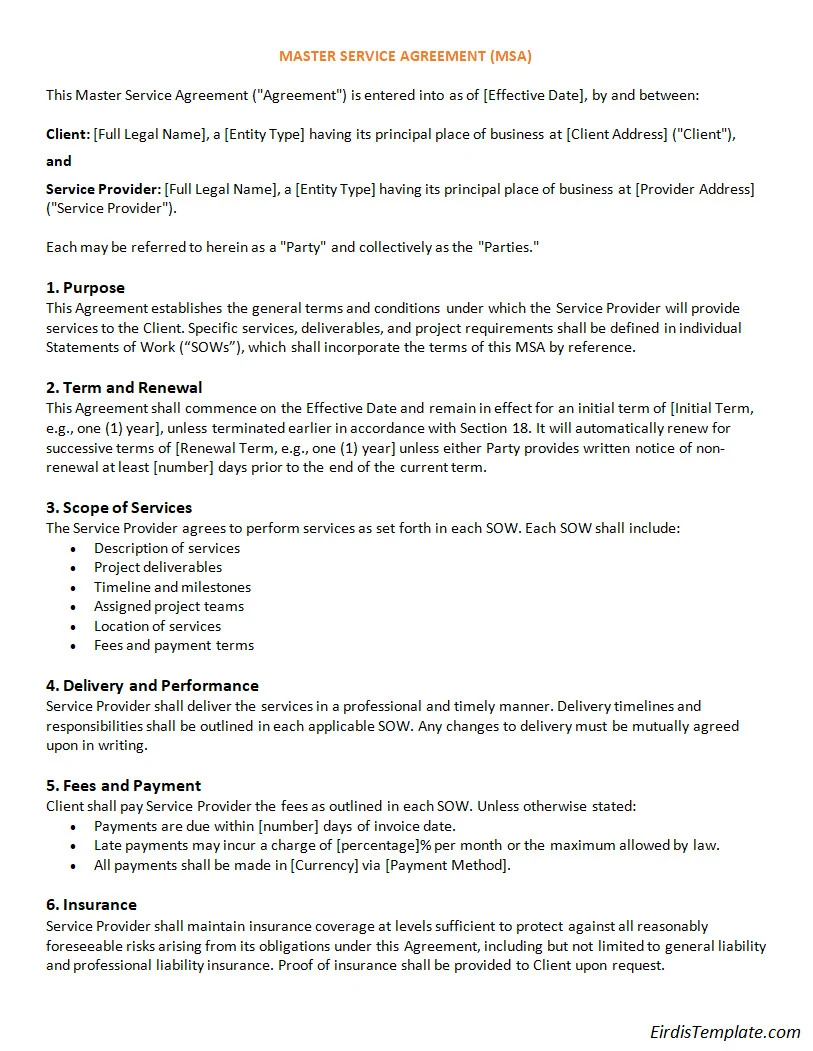
In the world of business relationships, a Master Service Agreement (MSA) plays a crucial role in establishing the terms and conditions for long-term partnerships. Whether you are a client or a service provider, understanding the intricacies of an MSA is essential for fostering a successful collaboration.
This comprehensive guide will delve into the key components of an MSA, the benefits of using one, common risks to be aware of, and when to utilize this important document.
What is a Master Service Agreement (MSA)?
A Master Service Agreement (MSA) serves as a foundational document that outlines the overarching terms and conditions governing a business relationship between two or more parties. It sets the stage for future contracts by defining essential elements upfront, such as payment terms, intellectual property rights, confidentiality provisions, and dispute resolution mechanisms.
By establishing these core aspects at the outset, MSAs streamline the negotiation process for subsequent agreements, saving time and resources in the long run.
Benefits of Using an MSA
Utilizing a Master Service Agreement (MSA) offers numerous advantages for both clients and service providers engaged in a long-term business relationship. Some of the key benefits of using an MSA include:
Efficiency
By establishing the foundational terms and conditions upfront, MSAs streamline the contracting process for future projects. This efficiency saves time and resources by avoiding the need to renegotiate core elements with each new agreement. Parties can focus on the specific details of each project without having to revisit fundamental aspects covered in the MSA.
Clarity
MSAs provide unambiguous guidelines for the rights and responsibilities of each party involved in the partnership. This clarity helps to prevent misunderstandings and conflicts by clearly outlining expectations and deliverables. Having a well-defined MSA in place ensures that both parties are on the same page and reduces the risk of disputes arising from unclear terms.
Consistency
By using a standardized MSA template, parties can ensure consistency across multiple projects and agreements. Consistent terms and conditions help to establish a sense of trust and reliability between the parties, fostering a more stable and predictable business relationship. This consistency also simplifies the process of onboarding new projects and stakeholders.
Flexibility
While MSAs provide a solid foundation for the partnership, they are also flexible enough to accommodate changes in circumstances or project requirements. Parties can tailor specific terms and conditions to suit the unique needs of each project while maintaining the overarching framework established in the MSA. This flexibility allows for adaptation and growth within the partnership over time.
Common Risks of an MSA
Although MSAs offer significant benefits, parties should also be aware of potential risks when entering into such agreements. Understanding these risks can help parties navigate the negotiation process more effectively and mitigate potential challenges. Some common risks associated with MSAs include:
One-Sided Terms
In some cases, one party may have more negotiating power than the other, leading to the inclusion of terms that are heavily skewed in their favor. This imbalance can leave the other party at a disadvantage, resulting in an unfair distribution of rights and obligations. Both parties need to negotiate in good faith and strive for a mutually beneficial agreement.
Ambiguity
Poorly drafted MSAs can contain ambiguous language or vague provisions that leave room for interpretation. Ambiguity can lead to misunderstandings, disputes, and potential legal challenges down the line. To avoid ambiguity, parties should clearly define terms, obligations, and expectations in the MSA, ensuring that all parties have a shared understanding of the agreement.
Non-Compliance
Failure to comply with the terms of the MSA can have serious consequences, including penalties, termination of the agreement, or legal action. Parties must adhere to the agreed-upon terms and fulfill their obligations to avoid breaching the contract. Monitoring and enforcing compliance with the MSA is crucial for maintaining the integrity of the partnership and upholding the rights of both parties.
Changes in Circumstances
Business relationships are dynamic and subject to change over time. As such, parties may encounter unexpected challenges, shifting priorities, or new opportunities that require adjustments to the terms of the MSA. Parties need to communicate openly and proactively address any changes in circumstances that may impact the partnership. Regular reviews and updates to the MSA can help ensure that it remains relevant and effective.
What Should Be Included in an MSA?
When drafting a Master Service Agreement (MSA), it is essential to include specific provisions that address the unique needs and requirements of the parties involved. A well-crafted MSA should cover a wide range of topics to ensure that the agreement is comprehensive and effectively addresses all aspects of the partnership. Some key components that should be included in an MSA are:
Parties Involved
Clearly identifying the parties agreeing is the first step in drafting an MSA. This includes providing the legal names, addresses, and contact information for each party. By accurately identifying the parties, potential confusion or disputes can be avoided, ensuring that the agreement is enforceable and legally binding.
Scope of Services
Defining the scope of services to be provided is a critical component of an MSA. This section outlines the specific deliverables, tasks, and responsibilities of each party, setting clear expectations for the project. By detailing the scope of services, parties can ensure that they are aligned on the objectives and requirements of the partnership.
Payment Terms
Establishing clear and transparent payment terms is essential for avoiding misunderstandings and disputes related to compensation. This section of the MSA should outline the pricing structure, payment schedule, invoicing procedures, and any additional fees or expenses. By clearly defining the payment terms, parties can ensure that both sides are in agreement on financial matters.
Intellectual Property Rights
Addressing intellectual property rights is crucial in an MSA, especially in industries where innovation and creativity are valued. This section should clarify ownership rights to any intellectual property created during the partnership, including copyrights, trademarks, patents, and trade secrets. By clearly delineating intellectual property rights, parties can protect their valuable assets and prevent potential disputes over ownership.
Confidentiality
Protecting sensitive information and data shared between the parties is essential for maintaining trust and confidentiality. Confidentiality provisions in an MSA should outline the types of information that are considered confidential, the obligations of the parties to safeguard this information, and the circumstances under which disclosure may be permitted. By including robust confidentiality clauses, parties can protect their proprietary information and maintain the security of their data.
Dispute Resolution
Establishing a clear process for resolving disputes is vital for addressing conflicts that may arise during the course of the partnership. The dispute resolution section of an MSA should outline the procedures for handling disagreements, including steps for mediation, arbitration, or litigation. By defining a structured approach to conflict resolution, parties can avoid costly legal battles and work towards amicable solutions.
Master Services Agreement Checklist
Before finalizing a Master Service Agreement (MSA), it is essential to review the document thoroughly to ensure that all necessary components are included and that both parties fully understand and agree to the terms. To help guide you through this process, here is a comprehensive checklist to consider:
Review the Scope of Services
Carefully examine the scope of services outlined in the MSA to confirm that it accurately reflects the deliverables, timelines, and responsibilities agreed upon by both parties. Verify that the scope is comprehensive and aligns with the goals of the partnership, and make any necessary adjustments to ensure clarity and alignment.
Confirm Payment Terms
Double-check the payment terms specified in the MSA to ensure that they are clear, fair, and achievable for both parties. Verify the rates, payment schedule, invoicing procedures, and any additional fees or expenses to prevent misunderstandings or disputes related to compensation.
Verify Intellectual Property Rights
Review the intellectual property rights section of the MSA to confirm that ownership rights to any intellectual property created during the partnership are clearly defined and agreed upon. Ensure that both parties are aware of their rights and responsibilities regarding intellectual property, protecting valuable assets and fostering innovation.
Check Confidentiality Provisions
Carefully examine the confidentiality provisions outlined in the MSA to guarantee that sensitive information and data shared between the parties are adequately protected. Verify the types of information considered confidential, the obligations of confidentiality, and the circumstances under which disclosure may be permitted to maintain trust and security.
Understand Dispute Resolution
Familiarize yourself with the dispute resolution process detailed in the MSA to ensure that both parties are aware of the procedures for resolving conflicts. Understand the steps involved in mediation, arbitration, or litigation, and be prepared to follow the agreed-upon process in the event of a dispute to promote efficient resolution.
When to Use an MSA?
Master Service Agreements (MSAs) are particularly beneficial in situations where long-term partnerships are established and ongoing services are required. Knowing when to utilize an MSA can help streamline the contracting process, save time and resources, and lay the groundwork for successful collaborations. Consider using an MSA in the following scenarios:
Long-Term Business Relationships
When entering into a partnership that is expected to last for an extended period, an MSA can provide a solid foundation for the relationship. By establishing the overarching terms and conditions upfront, parties can avoid the need to renegotiate core elements for each new project, ensuring consistency and efficiency in the partnership.
Multiple Projects or Services
If the business relationship involves multiple projects or services over time, an MSA can help standardize the terms and conditions across all agreements. Using a standardized MSA template ensures consistency and clarity in the partnership, making it easier to onboard new projects and stakeholders while maintaining a cohesive approach to project management.
Complex Service Agreements
In industries where services are complex and involve various deliverables, timelines, and responsibilities, an MSA can help streamline the contracting process. By defining the scope of services, payment terms, intellectual property rights, and other essential components upfront, parties can ensure that all aspects of the partnership are addressed and agreed upon.
Risk Management
MSAs are valuable tools for managing risks associated with long-term partnerships and service agreements. By outlining responsibilities, obligations, and dispute resolution mechanisms in the MSA, parties can proactively address potential challenges and mitigate risks before they escalate. Using an MSA can help protect the interests of both parties and promote a more secure and stable business relationship.
Collaborative Partnerships
When entering into a collaborative partnership where both parties contribute expertise, resources, or intellectual property, an MSA can help clarify roles, responsibilities, and expectations. By establishing clear guidelines for collaboration, parties can ensure that each side’s contributions are valued and protected, fostering a more harmonious and productive partnership.
Regulatory Compliance
In industries subject to specific regulations or compliance requirements, an MSA can help ensure that the partnership adheres to legal standards and industry guidelines. By including provisions related to regulatory compliance, data protection, and confidentiality, parties can demonstrate their commitment to upholding legal and ethical standards in the partnership.
Complex Financial Arrangements
For partnerships involving complex financial arrangements, such as revenue-sharing agreements or performance-based incentives, an MSA can provide clarity and transparency regarding payment terms. By outlining the pricing structure, payment schedule, and performance metrics upfront, parties can align their financial interests and ensure that incentives are properly aligned with project goals.
Scalable Partnerships
When entering into a partnership that has the potential to grow and evolve, an MSA can provide a scalable framework for future projects and expansions. By setting the foundation with an MSA, parties can adapt the terms and conditions to accommodate changes in scope, scale, or objectives, ensuring that the partnership remains flexible and resilient in the face of growth.
Master Service Agreement Template – DOWNLOAD

- Free Printable T-Chart Template - September 12, 2026
- Free Printable Wanted Poster Template - September 12, 2026
- Surprise Party Invitation Template - September 12, 2026
