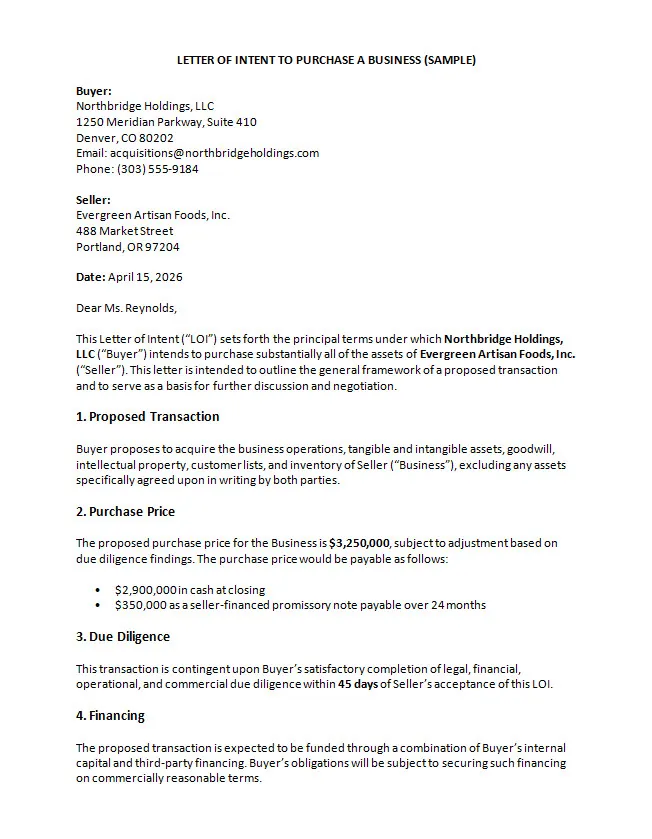
What Is a Letter of Intent?
A letter of intent (LOI) is a document used in business negotiations to outline the key terms and conditions of a potential transaction. It serves as a preliminary agreement between a buyer and a seller before a formal, legally binding contract is drawn up.
The purpose of an LOI is to establish a framework for the acquisition process, clarify the intentions of both parties, and help avoid misunderstandings as the deal progresses. Think of it as a roadmap that guides the negotiation process and sets the stage for a successful business acquisition.
Benefits of Using a Letter of Intent
There are several benefits to using a letter of intent in a business acquisition:
– Provides a roadmap for negotiations: An LOI outlines the key terms of the deal, making it easier for both parties to navigate the negotiation process.
– Clarifies intentions: By clearly defining the expectations of both the buyer and seller, an LOI helps avoid misunderstandings and miscommunications.
– Signals commitment: A letter of intent demonstrates the buyer’s serious interest in acquiring the business, which can give the seller confidence in the buyer’s intentions.
– Streamlines due diligence: By outlining the due diligence process and timeline, an LOI helps expedite the review of the business’s operations, finances, and legal matters.
– Sets the stage for a formal agreement: While an LOI is not legally binding, it paves the way for a formal contract to be drafted once the key terms have been agreed upon.
Drawbacks of Using a Letter of Intent
Despite its benefits, there are some drawbacks to using a letter of intent in a business acquisition:
– Not legally binding: An LOI is typically not a legally enforceable contract, which means either party can back out of the deal at any time.
– False sense of security: A letter of intent may create a false sense of security for the buyer or seller, leading them to believe that the deal is more certain than it actually is.
– Protracted negotiations: If the terms of the LOI are not well-defined, it can lead to prolonged negotiations as both parties try to reach a consensus on the key terms of the deal.
– Limited flexibility: Once an LOI is signed, it may limit the flexibility of the parties in negotiating the final terms of the agreement, as they are expected to adhere to the terms outlined in the LOI.
What Should a Letter of Intent Include?
Identification of the Parties Involved
One of the first things that should be included in a letter of intent is the identification of the parties involved in the transaction. This typically includes the legal names of the buyer and seller, as well as any other relevant entities that may be party to the agreement. Clearly identifying the parties helps avoid any confusion or misunderstanding about who is involved in the transaction.
Description of the Business Being Acquired
A detailed description of the business being acquired is essential in a letter of intent. This should include information about the business’s industry, products or services, customers, employees, and any key assets or liabilities. Providing a comprehensive overview of the business helps the buyer understand what they are acquiring and assists in the due diligence process.
Purchase Price and Payment Terms
The purchase price and payment terms are critical components of a letter of intent. The letter should clearly state the proposed purchase price for the business and outline how the payment will be structured. This could include details about whether the payment will be made in a lump sum or through installment payments, as well as any provisions for earn-outs or other contingent payments.
Due Diligence Process and Timeline
Defining the due diligence process and timeline is essential in an LOI. This section should outline the scope of the due diligence review, including the information and documents that will be reviewed, as well as the timeline for completing the due diligence process. Establishing clear expectations around due diligence helps ensure that both parties are aligned on what needs to be reviewed before moving forward with the transaction.
Contingencies for Closing the Deal
Contingencies are conditions that need to be satisfied before the deal can be finalized. Common contingencies in a letter of intent may include securing financing, obtaining regulatory approvals, or completing certain milestones. By outlining these contingencies in the LOI, both parties can understand what needs to be done to move the transaction forward to closing.
Confidentiality and Exclusivity Provisions
Confidentiality and exclusivity provisions are important to protect sensitive information and ensure that the seller does not negotiate with other potential buyers during the negotiation process. These provisions typically include agreements around non-disclosure of confidential information and exclusivity clauses that prevent the seller from soliciting competing offers for a specified period.
Governing Law and Dispute Resolution Mechanisms
The governing law and dispute resolution mechanisms establish the legal framework for the agreement and provide guidance on how disputes will be resolved if they arise. This section should specify the jurisdiction that will govern the agreement and outline the procedures for resolving any conflicts that may arise during the negotiation or execution of the transaction.
How to Write a Letter of Intent to Purchase a Business
Start with a Clear Introduction
When writing a letter of intent to purchase a business, it’s essential to start with a clear and concise introduction that outlines the purpose of the document. This section should briefly introduce the buyer, seller, and the business being acquired, and state the intention to negotiate a deal. Setting the tone for the rest of the document helps establish a professional and collaborative atmosphere for the negotiation process.
Define the Key Terms and Conditions
The next step in writing a letter of intent is to define the key terms and conditions of the potential deal. This includes outlining the purchase price, payment structure, due diligence process, contingencies, and any other essential terms that need to be agreed upon. Clearly defining these terms helps both parties understand what is expected and prevents misunderstandings during the negotiation process.
Include Contingencies
Contingencies are conditions that need to be met before the deal can be finalized. These can include obtaining financing, securing regulatory approvals, or completing certain milestones. When writing a letter of intent, it’s crucial to include contingencies that are reasonable and achievable within a specified timeframe. This helps ensure that both parties are aligned on what needs to be done to move the transaction forward.
Specify the Due Diligence Process
Detailing the due diligence process is a critical component of a letter of intent. This section should outline the scope of the due diligence review, including the information and documents that will be reviewed, as well as the timeframe for completing the due diligence process. Providing clear guidance on due diligence helps streamline the process and ensures that all necessary information is reviewed before finalizing the deal.
Address Confidentiality and Exclusivity
Confidentiality and exclusivity provisions are essential in a letter of intent to protect sensitive information and prevent the seller from engaging with other potential buyers. This section should include agreements around non-disclosure of confidential information, as well as clauses that prevent the seller from soliciting competing offers for a specified period. Clearly defining these provisions helps establish trust between the parties and protects the interests of both sides.
State Governing Law and Dispute Resolution
Specifying the governing law and dispute resolution mechanisms in a letter of intent helps establish the legal framework for the agreement and guides how conflicts will be resolved. This section should outline the jurisdiction that will govern the agreement and detail the procedures for resolving any disputes that may arise during the negotiation or execution of the transaction. By addressing these aspects upfront, both parties can be confident that any potential conflicts will be handled in a fair and transparent manner.
In crafting a letter of intent to purchase a business, it’s important to pay attention to detail, communicate clearly, and align expectations between both parties. By following these steps and including key elements such as identification of parties, business description, purchase price, due diligence process, contingencies, confidentiality provisions, and dispute resolution mechanisms, you can create a strong foundation for successful negotiations and pave the way for a smooth acquisition process.
Additional Considerations for a Letter of Intent
Include a Timeline
In addition to outlining the key terms and conditions of the deal, it can be beneficial to include a timeline in the letter of intent. This timeline should detail the expected milestones and deadlines for each stage of the acquisition process, from due diligence to the finalization of the deal. Having a clear timeline helps both parties stay on track and ensures that the transaction progresses smoothly and efficiently.
Define Roles and Responsibilities
Clearly defining the roles and responsibilities of each party involved in the transaction can help prevent misunderstandings and conflicts down the line. This section should outline who will be responsible for tasks such as providing financial information, facilitating the due diligence process, and drafting the final agreement. By establishing clear expectations around responsibilities, both parties can work together effectively to complete the transaction.
Be Specific and Detailed
When drafting a letter of intent, it’s essential to be as specific and detailed as possible in outlining the terms of the deal. Avoid vague language and ambiguity, as this can lead to confusion and disagreements later on. Clearly define each term, condition, and provision in the LOI to ensure that both parties have a complete understanding of what is expected and required to move forward with the transaction.
Seek Legal Counsel
While a letter of intent is not a legally binding contract, it is still advisable to seek legal counsel when drafting and reviewing the document. An experienced attorney can help ensure that the terms of the LOI are clear, enforceable, and in the best interests of both parties. Legal counsel can also help identify any potential risks or liabilities associated with the transaction and provide guidance on how to mitigate them.
Review and Revise as Needed
Before finalizing a letter of intent, it’s important to thoroughly review the document and make any necessary revisions. Both parties should have the opportunity to provide feedback and propose changes to ensure that the LOI accurately reflects their intentions and expectations. Open communication and a willingness to revise the document as needed can help prevent misunderstandings and set the stage for a successful negotiation process.
Maintain a Professional Tone
Throughout the drafting and negotiation of a letter of intent, it’s essential to maintain a professional and respectful tone. Avoid using inflammatory language or making demands that could sour the relationship between the buyer and seller. By approaching the negotiation process with professionalism and courtesy, both parties can build trust and work together collaboratively to reach a mutually beneficial agreement.
Letter of Intent to Purchase a Business Template – WORD

- Bank Letter For Direct Deposit Template - October 6, 2026
- Background Check Authorization Form Template - October 6, 2026
- Free Autobiography Template (Word) - October 6, 2026
