Ending a lease agreement before its original term expires can be a complex process that requires careful consideration and adherence to legal requirements. Whether you are a landlord or a tenant, understanding how to formally terminate a lease agreement is crucial for ensuring a smooth transition and avoiding any potential legal issues.
In this comprehensive guide, we will explore the various aspects of lease agreement termination, including reasons for termination, legal requirements, necessary documents, common pitfalls, and alternative options.
What Is A Lease Termination?
A lease termination refers to the formal end of the legal relationship between a landlord and a tenant before the original lease term expires. This can occur for various reasons, such as mutual agreement between both parties, breach of contract by either party, or specific conditions outlined in the lease agreement.
Terminating a lease ensures a clear and legally sound process for ending the tenancy and addresses any outstanding obligations or liabilities.
Why Would You Terminate A Lease Agreement?
There are several reasons why a landlord or a tenant may choose to terminate a lease agreement before its original term expires. Some common reasons include:
- Relocation: The tenant needs to move to a different location for personal or work-related reasons.
- Financial Issues: The tenant or the landlord is facing financial difficulties that make it challenging to continue the lease.
- Property Damage: The tenant has caused significant damage to the property, leading to a breach of the lease agreement.
- Violation of Lease Terms: Either party has violated the terms and conditions outlined in the lease agreement.
- Change in Circumstances: External factors or changes in circumstances make it untenable to continue the lease.
How Do You Legally Terminate A Lease Agreement?
When terminating a lease agreement, it is essential to follow the legal requirements outlined in the lease agreement and local tenancy laws. The following steps can help you navigate the process:
Reviewing the Lease Agreement
Before initiating the termination process, carefully review the terms and conditions outlined in the lease agreement. Pay close attention to any clauses related to termination, notice requirements, and obligations of both parties.
Providing Proper Notice
Most lease agreements require a specific notice period to be given before terminating the lease. This notice period may vary depending on the terms of the lease and local laws. Ensure that you provide the required notice in writing and within the specified timeframe.
Documenting Communication
Keep detailed records of all communication related to the lease termination, including the termination notice, any responses from the other party, and agreements reached during the process. Documentation can serve as evidence in case of any disputes or legal issues.
Following Legal Procedures
Adhere to the legal procedures for lease termination as outlined in the lease agreement and local tenancy laws. Failure to follow the correct procedures can result in legal consequences and disputes between the parties involved.
Seeking Legal Advice
If you are unsure about any aspect of the lease termination process or if you encounter any legal challenges, consider seeking advice from a legal professional specializing in real estate law. A lawyer can provide guidance and ensure that you are following the correct legal procedures.
Are There Any Specific Laws To Follow For Lease Termination?
Each state or jurisdiction may have specific laws and regulations governing lease termination. It is crucial to familiarize yourself with the relevant laws in your area to ensure compliance. Some common legal requirements for lease termination may include:
Notice Period
Most jurisdictions require a specific notice period to be provided before terminating a lease. The notice period can vary depending on the reason for termination and local laws. It is essential to check the requirements in your area to ensure compliance.
Reasons for Termination
Local tenancy laws may specify valid reasons for terminating a lease agreement. Common reasons may include non-payment of rent, violation of lease terms, or the landlord’s intention to sell the property. Understanding the permissible reasons for termination can help you navigate the process effectively.
Security Deposit Handling
Rules and regulations regarding the handling of the security deposit may vary from one jurisdiction to another. Landlords are typically required to return the security deposit within a specific timeframe after the lease termination, minus any deductions for damages or unpaid rent. Familiarize yourself with the security deposit laws in your area to ensure compliance.
Eviction Procedures
If a tenant refuses to vacate the property after the lease has been terminated, landlords may need to follow eviction procedures as outlined in local laws. Eviction procedures can vary depending on the jurisdiction and the reason for eviction. It is essential to understand the legal requirements for eviction to avoid any legal issues.
Local Regulations
Local regulations may impose additional requirements for lease termination, such as mandatory mediation or dispute resolution processes. Familiarize yourself with any local regulations that may impact the termination of a lease agreement to ensure compliance with the law.
What Legal Documents Will I Need To Terminate A Lease?
When terminating a lease agreement, you may need to prepare and sign several legal documents to formalize the process. Some common documents include:
Termination Notice
A termination notice is a written document that informs the other party of your intent to terminate the lease agreement. The notice should include the reason for termination, the effective date of termination, and any additional instructions or requirements specified in the lease agreement.
Lease Termination Agreement
A lease termination agreement is a formal document signed by both parties that outlines the terms of the lease termination. The agreement may include details such as the date of termination, any financial obligations, the return of the security deposit, and any other specific conditions agreed upon by both parties.
Move-Out Inspection Form
A move-out inspection form is used to document the condition of the property at the time of move-out. Both parties should conduct a final walkthrough inspection to assess any damages or cleanliness issues. The move-out inspection form can help resolve any disputes related to the security deposit refund.
Release of Liability
A release of liability document releases one party from any further obligations under the lease agreement after termination. This document ensures that both parties are aware of their responsibilities following the termination of the lease and helps prevent any future disputes or claims related to the tenancy.
Confirmation of Termination
It is essential to obtain written confirmation of the lease termination from both parties to ensure clarity and prevent misunderstandings. A confirmation of termination document can serve as proof that the lease has been formally terminated and that both parties agree to the terms of termination.
Common Pitfalls And How To Avoid Them
When terminating a lease agreement, it is essential to be aware of common pitfalls that can lead to legal disputes or complications. Some common pitfalls include:
- Failure to Provide Proper Notice: Not giving the required notice period as outlined in the lease agreement or local laws.
- Ignoring Lease Terms: Terminating the lease without following the specific terms and conditions outlined in the agreement.
- Disputes Over Security Deposit: Disagreements over the return of the security deposit after the lease termination.
- Unilateral Termination: Terminating the lease without agreement from the other party, leading to potential legal action.
- Lack of Documentation: Failing to keep detailed records of all communications and agreements related to the termination.
How Is The Security Deposit Returned?
One crucial aspect of lease termination is the return of the security deposit to the tenant. When the lease agreement is terminated, the landlord is typically required to return the security deposit within a specific timeframe, minus any deductions for damages or unpaid rent. Here’s a more detailed look at the process of returning the security deposit:
Final Walkthrough Inspection
Before returning the security deposit, both parties should conduct a final walkthrough inspection of the property to assess any damages or cleaning issues. The landlord should provide the tenant with an opportunity to address any concerns or rectify any damages before finalizing the return of the security deposit.
During the walkthrough inspection, both parties should document any existing damages or cleanliness issues with written descriptions and photographs. This documentation can help resolve any disputes that may arise regarding the return of the security deposit.
Processing the Refund
Once the final walkthrough inspection is complete and any outstanding issues have been resolved, the landlord is responsible for processing the refund of the security deposit. The security deposit should be returned to the tenant within the timeframe specified in the lease agreement or local laws.
When returning the security deposit, the landlord should provide an itemized list of any deductions made from the deposit, along with receipts or invoices for any repairs or cleaning services. This transparency helps ensure that both parties understand the reasons for any deductions and can address any concerns or disagreements.
Dispute Resolution
If there are disputes over the return of the security deposit, both parties should attempt to resolve the issues amicably through communication and negotiation. If an agreement cannot be reached, the parties may need to seek mediation or legal assistance to resolve the dispute effectively.
Disputes over the security deposit can lead to legal action and additional costs for both parties. By following the proper procedures for returning the security deposit and maintaining open communication, landlords and tenants can minimize the risk of disputes and ensure a smooth transition after lease termination.
Lease Agreement Termination Template
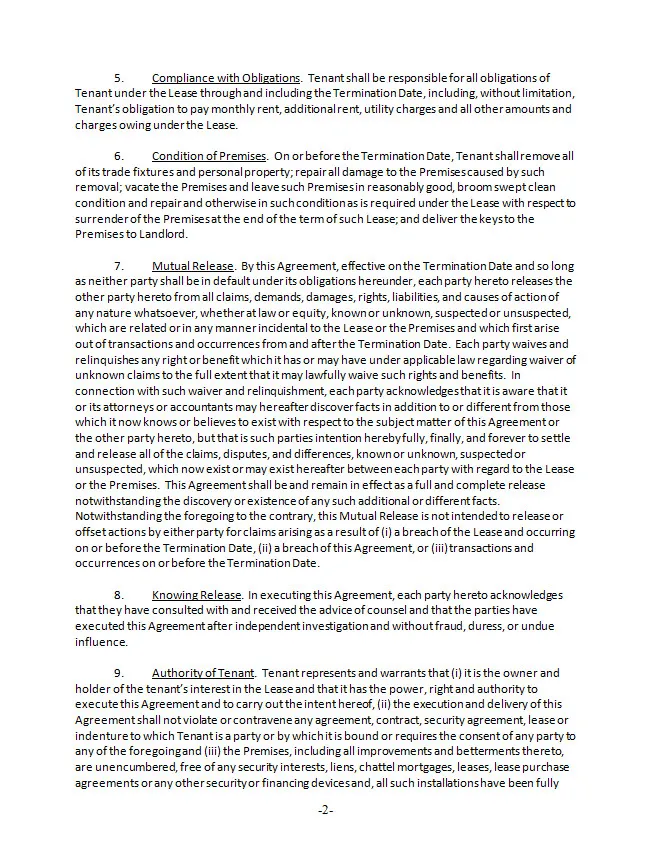
A Lease Agreement Termination helps landlords or tenants formally and professionally end a lease agreement in accordance with its terms. It clearly states the intent to terminate, the effective date, the notice period, and any required conditions such as property inspections or final payments. With a structured template, you can ensure proper notice, reduce misunderstandings, and document the termination clearly and legally.
Download our Lease Agreement Termination Template today to end a lease properly and with confidence.
Lease Agreement Termination Template – DOWNLOAD

- Printable Weekly Food Chart Template - September 18, 2026
- Free Printable Weekly Cleaning Chart Template - September 18, 2026
- Free Separation Agreement Template (Word) - September 18, 2026
